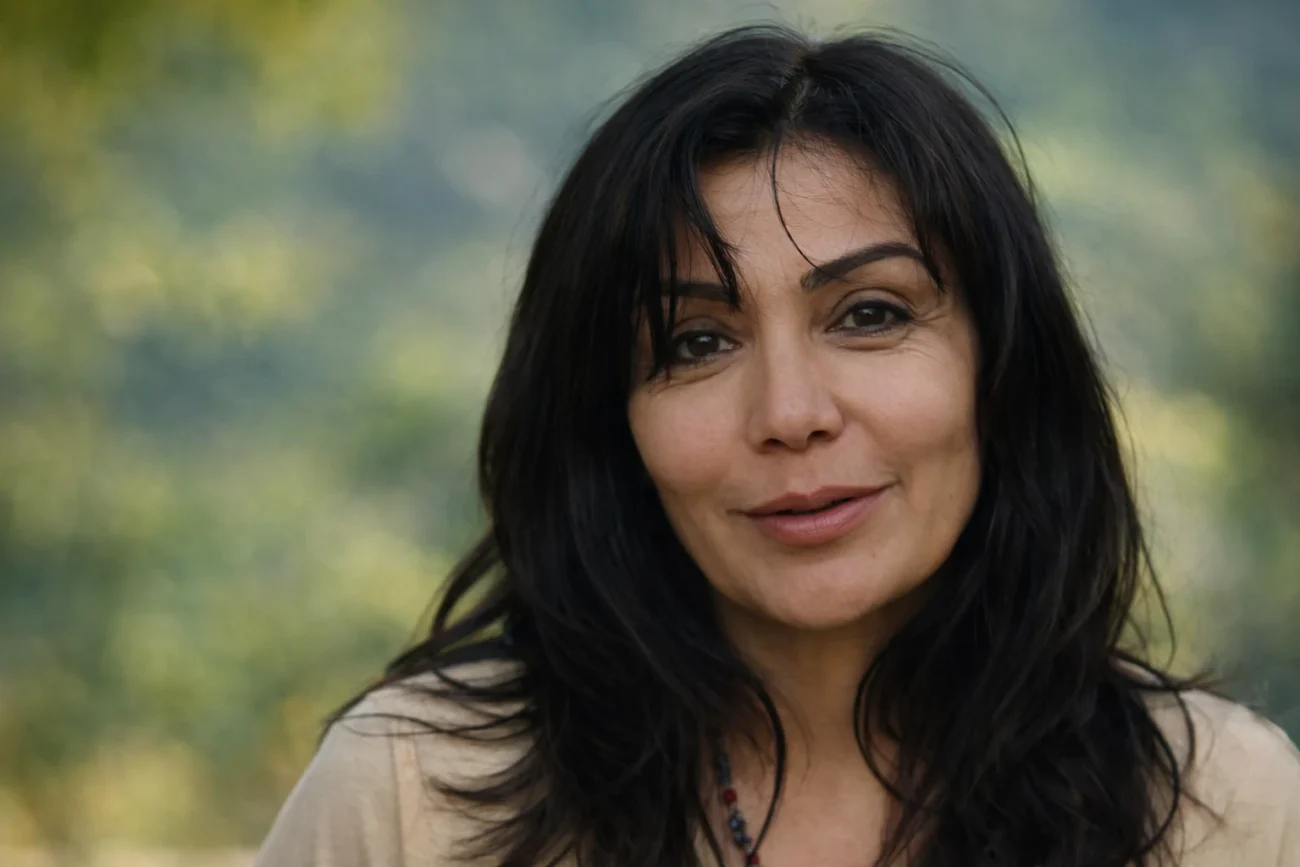
María Elvira Murillo has never been a public figure in the way most biographies demand. She did not build a career in politics, entertainment, or business that left a visible paper trail. Instead, her name surfaced in connection with one of the most notorious figures in Mexico’s modern history: Miguel Ángel Félix Gallardo, widely known as “El Jefe de Jefes,” a central architect of the Guadalajara cartel in the 1980s. For many readers, Murillo’s story begins there—not because it defines her entirely, but because it is the narrow window through which the public has come to know her.
That imbalance has shaped how her life is understood. Where Gallardo’s actions are documented in court records, investigative reporting, and international headlines, Murillo’s presence remains quieter, mostly confined to mentions in family context and occasional media references. The result is a biography that must be built carefully, respecting both what can be confirmed and what remains outside public view.
Early Life and Background
There is no widely verified, detailed account of María Elvira Murillo’s early life in the public domain. Her birthplace, date of birth, and educational background have not been consistently documented in reliable, mainstream sources. This absence is unusual by the standards of modern biography, but it is not uncommon for individuals who did not seek public roles or careers.
What can be inferred, cautiously, is that Murillo lived in Mexico during a period of profound social and political change, particularly in the 1970s and 1980s when the country’s drug trade expanded dramatically. However, connecting her directly to those broader developments without evidence would be misleading. Her early life, as far as the public record shows, remains largely private.
This lack of documentation has led to a proliferation of speculative accounts online. Many of these claim specific details about her upbringing or family, but they rarely cite verifiable sources. As a result, any responsible profile must acknowledge that her formative years are, at least publicly, unknown.
Marriage to Miguel Ángel Félix Gallardo
María Elvira Murillo is most commonly identified as the second wife of Miguel Ángel Félix Gallardo. Their relationship placed her in close proximity to one of the most powerful and controversial figures in Mexico’s drug trade. Gallardo, a former police officer turned trafficker, helped coordinate the distribution networks that connected Mexican producers with Colombian cocaine suppliers and U.S. markets.
The exact timeline of Murillo’s marriage to Gallardo is not fully detailed in widely accessible records. However, their relationship appears to have been established during the height of his influence in the 1980s. This was a period when the Guadalajara cartel operated with significant reach, benefiting from a mix of business acumen, strategic alliances, and, according to many reports, corruption within elements of the Mexican state.
Being married to a figure of that magnitude would have placed Murillo in an environment defined by secrecy, wealth, and risk. Yet there is little direct reporting on her role within that world. Unlike some spouses of high-profile figures, she did not become a public spokesperson, nor did she cultivate a visible identity tied to her husband’s activities.
Family Life and Children
Reports from Mexican media indicate that María Elvira Murillo and Félix Gallardo had children together. The names most often cited are Miguel Félix Murillo and Abril Félix Murillo. These references appear in outlets that have covered Gallardo’s family structure, particularly in the context of his later life and imprisonment.
The presence of children adds an important dimension to Murillo’s story. It suggests that, beyond the headlines and criminal investigations, there was a private family life that continued even as Gallardo’s legal troubles escalated. In interviews given decades later, Gallardo himself spoke about his children and grandchildren, describing the toll that his imprisonment had taken on his family.
What remains unclear is the extent of Murillo’s involvement in her children’s public or professional lives. There is no substantial reporting that places her in a visible role in their careers or public activities. Like much of her life, her role as a mother appears to have been largely private.
The Arrest of Félix Gallardo and Its Impact
The late 1980s marked a turning point not only for Miguel Ángel Félix Gallardo but also for those closest to him. Following years of investigation, he was arrested in 1989, several years after the kidnapping and murder of DEA agent Enrique “Kiki” Camarena, an event that intensified pressure on Mexican authorities to act against cartel leaders.
Gallardo’s arrest effectively dismantled the centralized structure of the Guadalajara cartel, leading to the fragmentation of its operations into smaller, competing groups. For his family, including María Elvira Murillo, this moment likely brought a dramatic shift in circumstances.
While there is limited direct reporting on Murillo’s personal experience during this period, it is reasonable to assume that the arrest altered her daily life in significant ways. The sudden loss of Gallardo’s influence and the scrutiny that followed would have affected not only financial stability but also personal security and privacy.
Public Appearances and Family Advocacy
María Elvira Murillo has not been a frequent presence in media coverage. However, there are documented instances where Gallardo’s family, including his wife and children, engaged with the public sphere. One notable example occurred in 2011, when a letter attributed to Gallardo’s family was circulated, alleging mistreatment and inadequate medical care during his imprisonment.
This episode provides a rare glimpse into the family’s willingness to speak out under certain circumstances. It suggests that, while Murillo generally remained out of the spotlight, she may have participated in collective efforts to advocate for her husband’s welfare.
Even so, these appearances were limited and focused on specific issues rather than broader public engagement. Murillo did not transition into a public-facing role or become a recurring voice in discussions about Gallardo’s case.
Business Associations and Financial Questions
Some reports have linked María Elvira Murillo to business activities, particularly in the real estate sector. One name that appears in certain accounts is “Inmobiliaria Delia,” which is described as a company associated with her during or after her marriage to Gallardo.
The truth is, these claims are difficult to verify with confidence. While they appear in some media outlets, they are not consistently supported by detailed documentation or independent investigation. As a result, any discussion of her business interests must be approached with caution.
The same applies to questions about her financial status or net worth. There are no reliable, publicly verified estimates that can be attributed to Murillo herself. Given Gallardo’s known wealth during his years of influence, it is possible that she benefited from that period, but there is no clear record of her personal financial standing in the years that followed.
The Influence of Narcos: Mexico
For many people outside Mexico, María Elvira Murillo became a recognizable name because of Narcos: Mexico, the Netflix series that dramatizes the rise of the Guadalajara cartel. In the show, she is portrayed as a significant figure in Gallardo’s personal life, with storylines that explore the emotional and domestic dimensions of his world.
The series, while grounded in real events, takes creative liberties to build compelling narratives. Characters are often developed beyond what the historical record can fully support, and private conversations are imagined to give viewers a sense of intimacy and drama.
This portrayal has had a lasting impact on Murillo’s public image. It has created a version of her that feels vivid and accessible, even though the real person remains largely undocumented. For viewers, the distinction between dramatization and reality is not always clear, which has contributed to ongoing curiosity about her life.
Public Image and Privacy
One of the most striking aspects of María Elvira Murillo’s story is her enduring privacy. In an era when even minor public figures often maintain a digital footprint, Murillo’s absence from social media and public platforms stands out.
This absence may be intentional. Given the notoriety of her former husband and the potential risks associated with public exposure, maintaining a low profile would be a logical choice. It also reflects a broader pattern among families connected to organized crime, where discretion can be a form of protection.
At the same time, this privacy has allowed speculation to flourish. Without regular public statements or verified updates, gaps in information are often filled by assumption. This makes it all the more important to distinguish between what is known and what is merely suggested.
Where María Elvira Murillo Is Now
There is no confirmed, up-to-date public record detailing María Elvira Murillo’s current location or activities. Various online sources claim that she lives a quiet life, possibly in Mexico, but these assertions are not backed by strong evidence.
What is clear is that she has not sought public attention in recent years. Unlike some figures connected to high-profile cases, she has not given interviews, published memoirs, or participated in documentaries. Her current life, as far as the public can tell, remains private.
This absence of information can be frustrating for readers, but it is also a reminder that not every life connected to a major historical figure becomes a public narrative. In Murillo’s case, privacy appears to have been preserved, whether by choice or circumstance.
Frequently Asked Questions
Who is María Elvira Murillo?
María Elvira Murillo is known primarily as the second wife of Miguel Ángel Félix Gallardo, a key figure in the history of the Guadalajara cartel. Her name appears in media coverage related to his family, but detailed information about her own life is limited.
Is María Elvira Murillo still alive?
There is no widely confirmed public information about her current status. Many sources assume she is alive, but without recent reporting or public statements, this cannot be verified with certainty.
Did María Elvira Murillo have children with Félix Gallardo?
Yes, reports indicate that they had children together, including a son named Miguel Félix Murillo and a daughter named Abril Félix Murillo. However, detailed public information about their lives is also limited.
Was María Elvira Murillo involved in the cartel’s activities?
There is no verified evidence that she played a direct role in the operations of the Guadalajara cartel. Most references to her focus on her position within Gallardo’s family rather than any involvement in criminal activities.
What business did María Elvira Murillo have?
Some reports suggest she was associated with a real estate business, but these claims are not consistently documented in reliable sources. As a result, her business activities remain uncertain.
Why is María Elvira Murillo featured in Narcos: Mexico?
The series includes her as a character to explore the personal side of Miguel Ángel Félix Gallardo’s life. While based on a real person, the portrayal includes dramatized elements that go beyond what is publicly documented.
Conclusion
María Elvira Murillo’s biography is defined as much by what is unknown as by what is known. Her connection to Miguel Ángel Félix Gallardo placed her near one of the most consequential chapters in modern criminal history, yet she herself has remained largely outside the spotlight.
That distance from public life is not a gap to be filled with speculation. Instead, it is a reminder that history often preserves certain voices more clearly than others. Murillo’s story exists in fragments, shaped by family ties, media portrayals, and the enduring fascination with the world her former husband helped create.
For readers, the challenge is to approach her life with care. The available facts tell part of the story, but they do not form a complete portrait. What remains is a figure who, despite her proximity to power and controversy, has managed to retain a measure of privacy that is increasingly rare.
