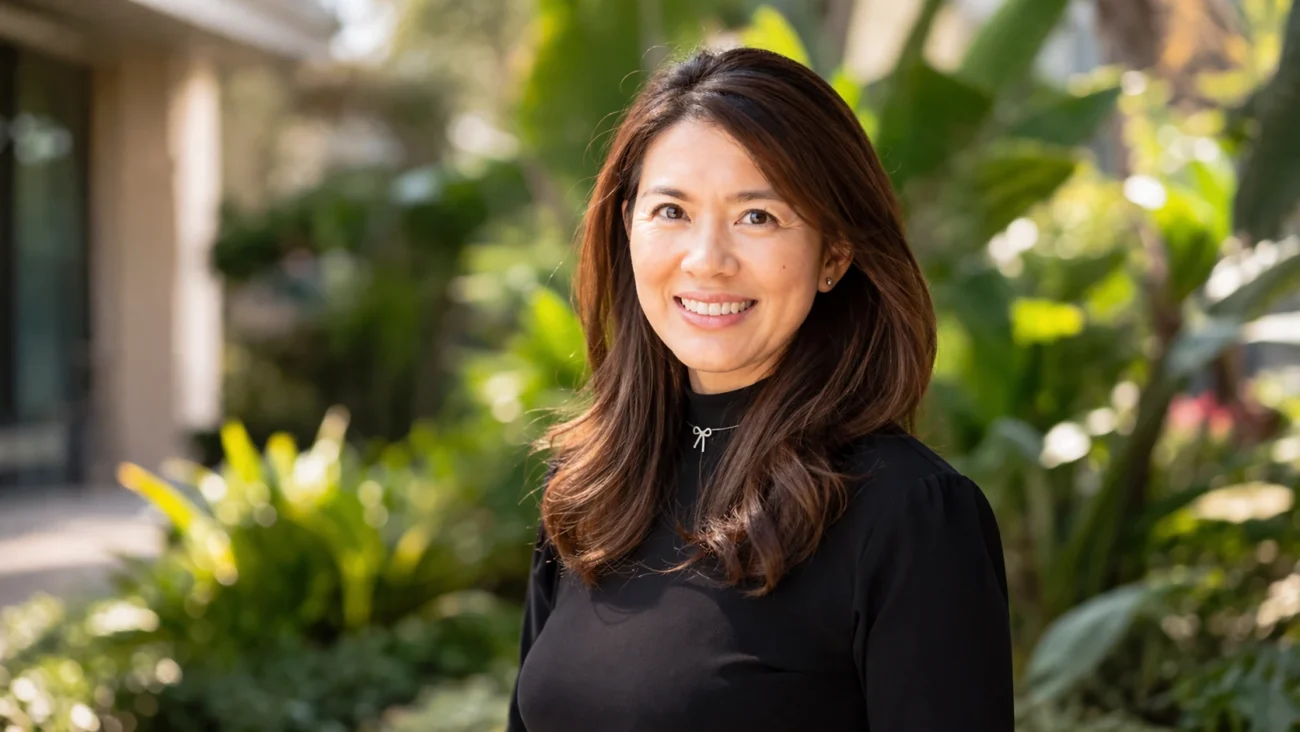
On a quiet stretch of South Beverly Drive in Los Angeles, far from the noise of cable news studios and political debates, Wendy Lang has built a career that resists spectacle. Clients come not for headlines but for help—with anxious children, struggling teenagers, strained marriages, or the complicated emotional lives that don’t fit neatly into diagnoses. That contrast—between a private therapeutic practice and a public association with one of America’s more outspoken political commentators—has shaped how people encounter her name. For some, Wendy Lang is a search query tied to curiosity about a media figure’s spouse. For others, she is a clinician whose work has quietly influenced hundreds of families.
The truth sits somewhere between those two entry points. Wendy Lang is best understood not as a public personality but as a working professional: a licensed marriage and family therapist in Beverly Hills, California, and the founder of Beverly Hills Child and Family Counseling. Her story, as far as the public record allows, is less about fame and more about the steady, often invisible labor of helping people make sense of themselves and one another.
Early Life and Family
Publicly available information about Wendy Lang’s early life is limited, and that absence is telling in itself. Unlike many figures who appear in search results, she has not cultivated a detailed personal narrative for public consumption. There are no widely confirmed accounts of her childhood, hometown, or early family environment, and reputable sources do not provide specific details about her parents or upbringing.
That gap reflects both professional norms and personal choice. Therapists, particularly those who work with children and families, often maintain a clear boundary between their private lives and their clinical roles. The result is that Wendy Lang enters the public record not as a subject of biography in the traditional sense, but as a professional defined by her training and her work.
Still, one can infer certain things from her career trajectory. Her eventual specialization in child and family counseling suggests an early interest in human development, relationships, and the ways emotional patterns take shape within households. Whether those interests were sparked by personal experience or academic curiosity is not documented, and it is important not to fill that silence with speculation.
Education and Path Into Therapy
What is confirmed is her academic training. Wendy Lang earned her master’s degree from the University of Southern California, one of the most established programs in counseling and family therapy in the United States. Her degree laid the foundation for licensure as a Marriage and Family Therapist in California, a credential that requires both graduate education and supervised clinical experience.
Becoming an LMFT in California is not a quick process. Candidates must complete thousands of hours of supervised practice before qualifying for licensure, followed by passing a state-administered examination. That path signals a commitment to clinical work that goes beyond surface-level interest, and it places Lang within a regulated profession with defined ethical standards.
By the mid-2000s, she had transitioned into private practice, working directly with clients rather than in institutional settings. Over time, she expanded her scope to include not just individuals but entire family systems, which is consistent with the core philosophy of marriage and family therapy. The emphasis is less on isolating a single patient and more on understanding how relationships, communication patterns, and shared environments influence behavior.
Building a Practice in Beverly Hills
Wendy Lang’s professional identity is most clearly expressed through Beverly Hills Child and Family Counseling, the practice she founded and directs. Located in one of Los Angeles’ most recognizable neighborhoods, the clinic operates at a level where accessibility and privacy intersect. Clients often seek discretion as much as expertise, especially in a community where public exposure can carry professional or social consequences.
Her practice focuses on children, adolescents, and families, with services extending to adults and couples as well. According to her public profiles, she has worked with more than a thousand families over the course of her career, addressing issues that range from anxiety and depression to divorce, grief, and behavioral challenges. These are not rare or exotic problems, but they are deeply personal ones that require sustained, individualized attention.
A notable aspect of her approach is the use of play and art therapy for younger clients. These methods allow children to communicate feelings that they may not yet have the language to express directly. For parents, this can be a revelation, offering insight into a child’s internal world that might otherwise remain hidden behind behavior that appears confusing or disruptive.
Her practice also includes group therapy programs, particularly for adolescents and parents. These groups are designed to create a shared space where participants can learn from one another under the guidance of a therapist. In a field that often emphasizes one-on-one sessions, this group-based work reflects an understanding that many emotional challenges are social at their core.
Focus on Gifted and Twice-Exceptional Clients
One of the defining features of Wendy Lang’s work is her focus on gifted and twice-exceptional individuals. The term “twice-exceptional,” often abbreviated as 2e, refers to people who are both intellectually gifted and affected by learning differences or developmental conditions such as ADHD or autism.
This specialization did not emerge in isolation. According to her professional biography, Lang began noticing a pattern in her client base, with a significant number of children and teens falling into the gifted or 2e category. That observation led her to pursue additional training and attend conferences organized by Supporting Emotional Needs of the Gifted, or SENG, a nonprofit focused on the emotional well-being of gifted individuals.
Working with this population requires a specific skill set. Gifted children may experience heightened sensitivity, perfectionism, or asynchronous development, where intellectual abilities outpace emotional or social maturity. For twice-exceptional clients, the situation can be even more complex, as strengths and challenges can mask each other, leading to misdiagnosis or misunderstanding.
Lang’s practice addresses these dynamics not just through individual therapy but also through parent education. Her SENG-model parent groups aim to help caregivers understand their children’s needs, manage expectations, and develop communication strategies that support both emotional growth and intellectual development.
A Career Defined by Quiet Consistency
Unlike public figures who build careers through visibility, Wendy Lang’s professional life has been defined by consistency rather than sudden breakthroughs. There is no single moment that marks her rise to prominence, no widely cited interview or media appearance that introduced her to a broad audience.
Instead, her reputation appears to have grown through word of mouth and professional networks. Families who find her services often come through referrals, school recommendations, or online therapist directories rather than through media exposure. This kind of growth is typical in clinical professions, where trust and outcomes carry more weight than publicity.
Her longevity in the field also speaks to a sustained demand for her services. Working in private practice for more than two decades suggests not only professional competence but also the ability to adapt to changes in mental health awareness, treatment approaches, and client expectations. Over that time, the conversation around mental health, particularly for children and adolescents, has shifted significantly, and therapists who remain active must evolve with it.
Marriage to Cenk Uygur and Public Curiosity
For many people, Wendy Lang’s name enters their awareness through her marriage to Cenk Uygur, the political commentator and founder of The Young Turks. Uygur is known for his outspoken style and strong opinions, which have made him a visible and sometimes controversial figure in American media.
Public records indicate that the couple married in 2008 and have two children together. Beyond those basic facts, details about their relationship and family life are scarce. Neither Lang nor Uygur has built a public narrative around their marriage, and their private life remains largely out of view.
That contrast—between Uygur’s high-profile career and Lang’s private clinical work—has fueled curiosity, but it has not translated into a shared public persona. Lang does not appear to use her association with Uygur to promote her practice, nor does she maintain a visible media presence that capitalizes on that connection.
The result is a kind of asymmetry. One partner operates in a space defined by visibility and public debate, while the other works in a field where confidentiality and discretion are essential. For readers, that dynamic can be intriguing, but it also underscores the importance of separating professional identity from personal association.
Public Image and Professional Boundaries
Wendy Lang’s public image is shaped as much by what is not known as by what is. In an era where personal branding often blurs the line between private and public life, her limited digital footprint stands out. She does not appear to maintain a highly active social media presence, nor does she engage in frequent public commentary.
This restraint aligns with the ethical framework of her profession. Therapists are expected to prioritize client confidentiality and maintain clear boundaries, which can extend to how much of their own lives they share publicly. A lower public profile can also make clients feel more secure, knowing that their therapist is not simultaneously cultivating a media persona.
At the same time, the scarcity of personal information has led to the proliferation of speculative or low-quality biographies online. Many of these pages repeat unverified claims or present assumptions as facts, creating a distorted picture of who she is. For readers, distinguishing between reliable sources and content created for search traffic is an essential part of understanding her story.
Business, Income, and Net Worth
As a private practitioner, Wendy Lang’s income is tied primarily to her clinical work. Public listings indicate that her session fees are in the higher range for therapy services, which is consistent with her location in Beverly Hills and her level of experience. She operates out of network, meaning clients typically pay out of pocket rather than through direct insurance billing.
There are no verified public figures for her net worth, and estimates that appear online should be treated with caution. Unlike celebrities or executives, therapists rarely have publicly disclosed financial information, and any attempt to assign a precise net worth without credible sourcing is speculative.
That said, a long-standing private practice in an affluent area, combined with group programs and specialized services, suggests a stable and successful business. Financial success in this context is less about public visibility and more about sustained demand and professional reputation.
Where Wendy Lang Is Now
As of the most recent publicly available information, Wendy Lang continues to run Beverly Hills Child and Family Counseling and see clients both in person and online. Her work remains focused on children, adolescents, families, and gifted or twice-exceptional individuals, with an emphasis on practical, relationship-centered therapy.
The broader context of her work has shifted in recent years, particularly as awareness of youth mental health challenges has grown. Rising rates of anxiety, depression, and social stress among young people have increased demand for therapists who can work effectively with both children and their families.
Lang’s continued presence in this space suggests a role that is both steady and relevant. While she may not be a household name, her work intersects with issues that affect millions of families, making her influence more diffuse but no less meaningful.
Frequently Asked Questions
Who is Wendy Lang?
Wendy Lang is a licensed marriage and family therapist based in Beverly Hills, California. She is the founder and director of Beverly Hills Child and Family Counseling and specializes in working with children, adolescents, families, and gifted or twice-exceptional individuals.
What is Wendy Lang known for?
She is known primarily for her clinical work in child and family therapy, particularly her focus on gifted and twice-exceptional clients. She is also known in public searches as the spouse of political commentator Cenk Uygur.
Is Wendy Lang a public figure?
Wendy Lang maintains a relatively private profile compared to traditional public figures. While her professional credentials and practice are publicly documented, details about her personal life are limited.
What does Wendy Lang specialize in?
Her specialties include anxiety, depression, ADHD, family conflict, divorce, and issues related to gifted and twice-exceptional individuals. She also uses play and art therapy techniques with children.
Is Wendy Lang married?
Yes, public records indicate that she has been married to Cenk Uygur since 2008, and they have two children together.
What is Wendy Lang’s net worth?
There are no verified public figures for her net worth. Any estimates found online should be treated as speculative, as her income is tied to private clinical practice rather than publicly reported earnings.
Conclusion
Wendy Lang’s story does not follow the arc of a typical public biography. There is no dramatic rise, no headline-making controversy, no carefully curated public persona. Instead, her life as it appears in the public record is defined by professional dedication, quiet consistency, and a commitment to work that rarely attracts attention but often has lasting impact.
Her role as a therapist places her at the intersection of some of the most personal challenges people face. Whether helping a child navigate anxiety, guiding parents through conflict, or supporting families dealing with complex developmental needs, her work unfolds in private rooms rather than public stages.
The curiosity surrounding her name is understandable, especially given her connection to a well-known media figure. But the more meaningful story lies in the work she has built and sustained over time. It is a reminder that not every life of significance is lived in public view, and that influence can take forms that are quiet, steady, and deeply human.
For readers, that may be the most important takeaway. Wendy Lang is not a figure defined by visibility, but by presence—the kind that matters most to the people who sit across from her, looking for understanding and a way forward.
