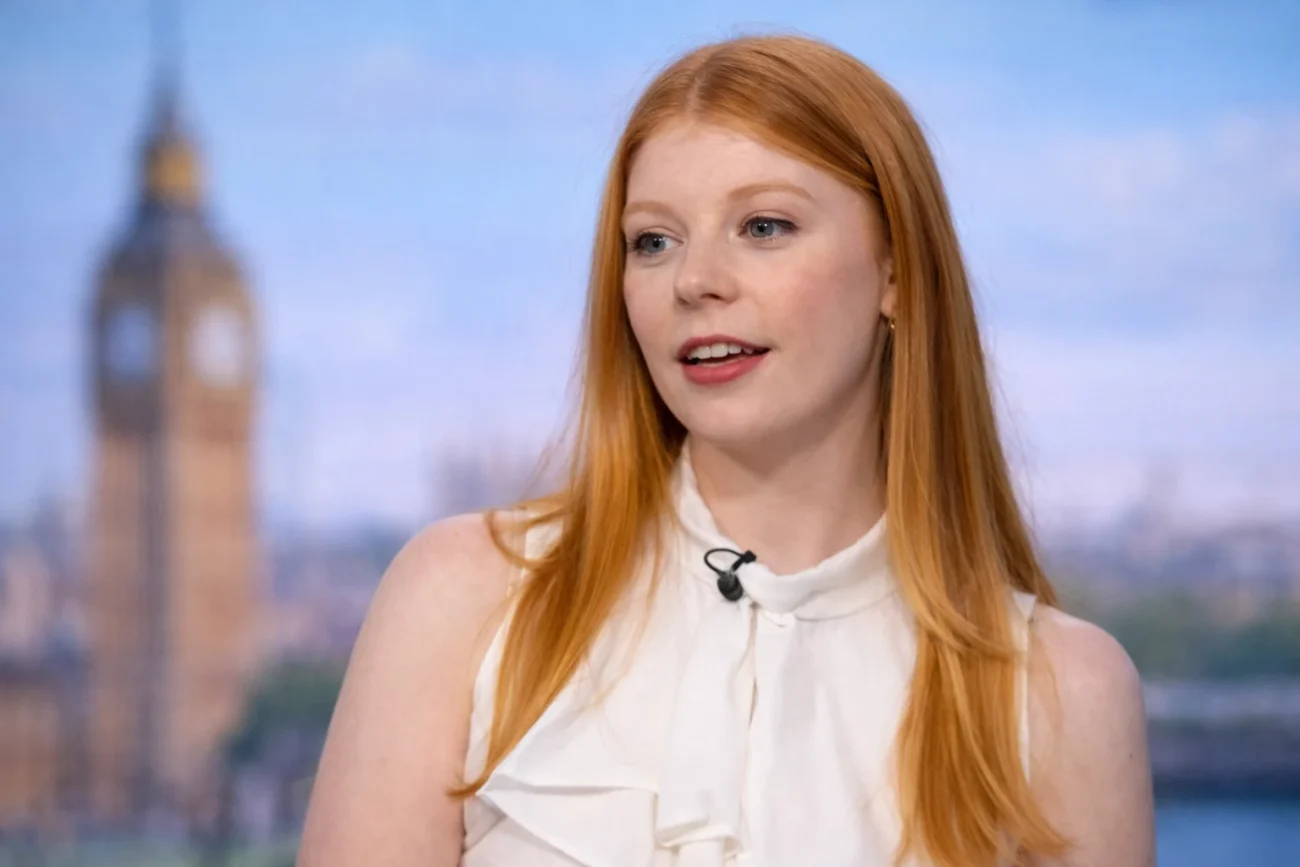
For many readers, the search begins with a simple expectation: type a name into Google, click on a Wikipedia page, and get a clean summary of who someone is. That expectation breaks down with Ailbhe Rea. Despite her growing presence in British political journalism, there is no widely established Wikipedia page that neatly captures her life and career. Instead, her story has to be pieced together from her reporting, her editorial roles, and the moments when she herself has stepped into the public conversation.
That absence says something about both Rea and the media world she works in. She is not a celebrity in the traditional sense, but she is increasingly influential in how British politics is reported, interpreted, and understood. Her career spans print, digital media, newsletters, and podcasts, placing her among a generation of journalists who operate across platforms rather than within a single newsroom identity. For readers searching “ailbhe rea wikipedia,” the real answer lies in tracing her path through those roles and understanding how she became a recognizable voice in Westminster reporting.
Early Life and Background
Publicly available information about Ailbhe Rea’s early life is limited, and that is not unusual for journalists who have built their careers on reporting rather than personal branding. What is known comes mostly from her own writing and indirect references in her work. Rea has described herself as being from Northern Ireland, a detail that has shaped parts of her reporting, particularly when covering the legacy of the Troubles and British government policy toward the region.
Her Irish first name, Ailbhe, is often unfamiliar to readers outside Ireland, and she has acknowledged that herself in subtle ways, including social media references to its pronunciation. While this may seem like a small detail, it reflects a broader point about identity and perception. Rea’s background places her both inside and slightly outside the London-centric world of British political journalism, which may help explain her interest in stories that stretch beyond Westminster’s immediate bubble.
Details about her family, including her parents or siblings, are not widely documented in reliable public sources. This is consistent with her overall approach to public life, which has remained focused on professional work rather than personal disclosure. For readers hoping for a traditional biographical profile filled with childhood anecdotes, the record simply does not support that level of detail.
Education and Entry into Journalism
Information about Rea’s formal education is not extensively confirmed in major, verifiable sources, though various secondary websites make claims about university affiliations. Those claims are often inconsistent and lack clear sourcing, which makes them difficult to treat as reliable. What can be said with more confidence is that she entered political journalism relatively early in her career and built her reputation through reporting rather than through a highly publicized academic background.
Rea has written about her early professional experiences in a way that gives some insight into this period. In a personal essay published in 2021, she reflected on being 24 years old when she experienced an incident involving Stanley Johnson, and she described her position at the time as her first job in political journalism. That suggests a relatively direct path into the field, without a long period spent in unrelated industries.
Her early work included contributions to London-based publications, including the Evening Standard, now known simply as The Standard. Those bylines show a journalist working her way into the political reporting space, covering stories that would eventually lead her deeper into Westminster coverage. Like many reporters at that stage, her early career appears to have been defined by persistence and gradual recognition rather than a single defining breakthrough.
Building a Career in Westminster Reporting
Ailbhe Rea’s career began to take clearer shape as she moved into roles that focused specifically on British politics. Her work with the New Statesman marked a significant step, placing her within one of the UK’s most established political and cultural magazines. Over time, she contributed reporting and analysis on some of the most closely watched developments in British political life.
Her writing often centers on the Labour Party, leadership dynamics, and the broader ideological direction of UK politics. Rather than sticking to daily news coverage, she has shown an interest in longer-form analysis and behind-the-scenes reporting. This approach has helped her stand out in a crowded media environment where speed often takes precedence over depth.
At the New Statesman, Rea progressed from a reporting role to a more senior editorial position. She has been identified in recent public sources as the magazine’s political editor, a role that signals both authority and responsibility within the publication. That position places her at the center of editorial decisions about political coverage, as well as ongoing reporting and commentary.
Her work during this period reflects a journalist who is as comfortable analyzing party strategy as she is examining the personalities shaping political events. Readers who encounter her writing are often looking for more than headlines; they are looking for explanation, context, and clarity about what is happening behind the scenes.
Bloomberg, Newsletters, and a Broader Audience
Rea’s career has not been confined to a single publication, and her time working with Bloomberg UK expanded her audience and reach. As an associate editor and writer of the newsletter The Readout, she contributed to a format that blends reporting with analysis and direct communication with readers. Newsletters have become an important part of modern journalism, offering a more personal and conversational tone than traditional articles.
Her work at Bloomberg placed her within a global media organization while still focusing on UK politics. This combination allowed her to speak both to domestic audiences and to international readers interested in British affairs. It also reflects a broader trend in journalism, where reporters are expected to adapt their work to multiple platforms and formats.
The newsletter format, in particular, requires a different kind of writing. It demands clarity, consistency, and a sense of voice that keeps readers engaged over time. Rea’s involvement in this space suggests an ability to maintain that connection with readers while continuing to report on complex political developments.
Podcasting and the Rise of a Public Voice
In addition to her written work, Ailbhe Rea has become known for her role as a podcast host. She has been associated with POLITICO’s Westminster Insider, a show designed to explain how British politics operates behind closed doors. The podcast format allows for a different kind of storytelling, one that relies on conversation, narrative structure, and audio presence.
Through podcasting, Rea has reached audiences who may not regularly read political magazines or newsletters. The format also gives her the opportunity to explore topics in greater depth, often through interviews and extended discussions. Episodes have covered everything from party conferences to the inner workings of political institutions, offering listeners a more detailed look at the machinery of government.
This move into audio journalism reflects a broader shift in the industry. Journalists are no longer defined solely by their written output; they are increasingly expected to communicate across platforms. Rea’s ability to transition into podcasting while maintaining her reporting work speaks to a level of adaptability that has become essential in modern media.
A Public Moment: Speaking Out on Conduct
One of the most widely discussed moments in Ailbhe Rea’s public life came in 2021, when she wrote about her experience involving Stanley Johnson, the father of former UK Prime Minister Boris Johnson. In her essay, she explained why she chose to speak out, linking her experience to a broader conversation about workplace behavior and accountability.
The article was significant not only for its content but also for its tone. Rea approached the subject with a mix of personal reflection and professional clarity, framing her experience within a wider context rather than presenting it as an isolated incident. Her decision to write about it publicly brought attention to her beyond her usual readership.
Media coverage of the allegations against Stanley Johnson included Rea’s account, placing her within a larger story about conduct in political and professional settings. This moment demonstrated that her role as a journalist does not always keep her at a distance from the stories she covers. At times, she has been part of the conversation herself.
Personal Life and Public Boundaries
Unlike many public figures, Ailbhe Rea has kept her personal life largely out of the spotlight. There is no widely confirmed information about her marital status, partner, or children in reliable public sources. This absence is not accidental; it reflects a deliberate choice to maintain a boundary between professional work and private life.
The internet, of course, does not always respect those boundaries. Various websites attempt to fill in gaps with speculation or unverified claims, but these should be approached with caution. Without clear sourcing, such details cannot be treated as reliable.
What is clear is that Rea’s public identity is defined primarily by her work. She has not built her profile around personal branding or lifestyle content, and she rarely shares personal details in her professional output. For readers accustomed to more open public figures, this can feel unusual, but it aligns with a long tradition of journalists who prefer to keep the focus on their reporting.
Financial Standing and Net Worth
There is no publicly confirmed figure for Ailbhe Rea’s net worth, and any estimates found online should be treated as speculative. Journalists, even those in senior editorial roles, do not typically disclose their earnings, and such information is rarely made public unless the individual chooses to share it.
That said, her career trajectory suggests a stable and established position within the media industry. Roles at publications such as the New Statesman and Bloomberg, along with podcast hosting and other media work, indicate multiple sources of professional income. Still, without verified figures, it would be inaccurate to assign a specific net worth.
The focus on financial details often reflects a broader curiosity about public figures, but in Rea’s case, the available information points more clearly to professional influence than to personal wealth.
Public Image and Influence
Ailbhe Rea’s public image is shaped by her work rather than by a carefully managed persona. She is known as a political journalist with a clear interest in how power operates within the UK. Her writing often emphasizes context and explanation, helping readers understand not just what is happening but why it matters.
Her presence across multiple platforms has increased her visibility, but it has not changed the core of her work. Whether writing an article, producing a newsletter, or hosting a podcast, she maintains a consistent focus on political reporting. This consistency has helped build trust with readers and listeners who return for insight rather than for personality.
What’s surprising is how her profile continues to grow without the traditional markers of fame. She does not rely on viral moments or constant media appearances, yet her name continues to appear in conversations about political journalism. That suggests a form of influence rooted in credibility rather than visibility alone.
Current Work and Where She Is Now
As of recent public information, Ailbhe Rea is serving as political editor at the New Statesman. In this role, she continues to write, edit, and shape the magazine’s political coverage. Her work remains focused on the major issues facing the UK, including party politics, policy debates, and the broader direction of government.
She also continues to be associated with podcasting and other media projects, reflecting the multi-platform nature of her career. This combination of roles places her at the center of contemporary political journalism, where traditional reporting intersects with newer forms of media.
Her current position suggests a journalist who has moved beyond early career reporting into a role that influences both content and direction. For readers searching for a Wikipedia-style summary, this is perhaps the most important takeaway: she is an established and active figure in British political media.
Frequently Asked Questions
Is there a Wikipedia page for Ailbhe Rea?
As of now, there is no widely recognized standalone Wikipedia article dedicated to Ailbhe Rea. Searches often lead to pages about the Irish name “Ailbhe” or to unrelated entries. This absence has led many readers to seek information through other sources.
What is Ailbhe Rea known for?
She is known for her work as a political journalist and editor, particularly her reporting on UK politics. Her roles at the New Statesman, Bloomberg UK, and her involvement in political podcasts have made her a recognized voice in Westminster coverage.
Where is Ailbhe Rea from?
She has publicly identified herself as being from Northern Ireland. This background has influenced some of her reporting, especially when covering issues related to the region and its political history.
Has Ailbhe Rea worked in television?
There is no strong public record of her working as a television presenter or anchor. Her media presence is primarily in print, digital journalism, newsletters, and podcasting.
What happened with Stanley Johnson?
In 2021, Rea wrote about her experience involving Stanley Johnson, describing an incident of inappropriate behavior. Her account contributed to broader media coverage and discussion about workplace conduct.
What is her current role?
She is currently identified as political editor of the New Statesman. In this position, she contributes to and oversees political coverage at the publication.
Conclusion
Ailbhe Rea’s story does not follow the familiar arc of a public figure with a neatly packaged biography. Instead, it unfolds through her work, her reporting, and the roles she has taken on within the media industry. The absence of a Wikipedia page is less a gap in information than a reflection of how her career has developed—steadily, across platforms, and without the trappings of celebrity.
Her background, shaped in part by her Northern Irish roots, informs a perspective that stands slightly apart from the traditional centers of British political journalism. That perspective has found expression in her writing, her editing, and her podcast work, all of which contribute to a broader understanding of UK politics.
The truth is, for readers searching “ailbhe rea wikipedia,” the most useful answer is not a single page but a collection of verified sources that show a journalist in motion. Her career continues to evolve, and with it, the public record that defines her.
What remains clear is that she has established herself as a credible and influential voice in political journalism. Whether or not a Wikipedia page appears in the future, her work already provides the most accurate and meaningful account of who she is.
