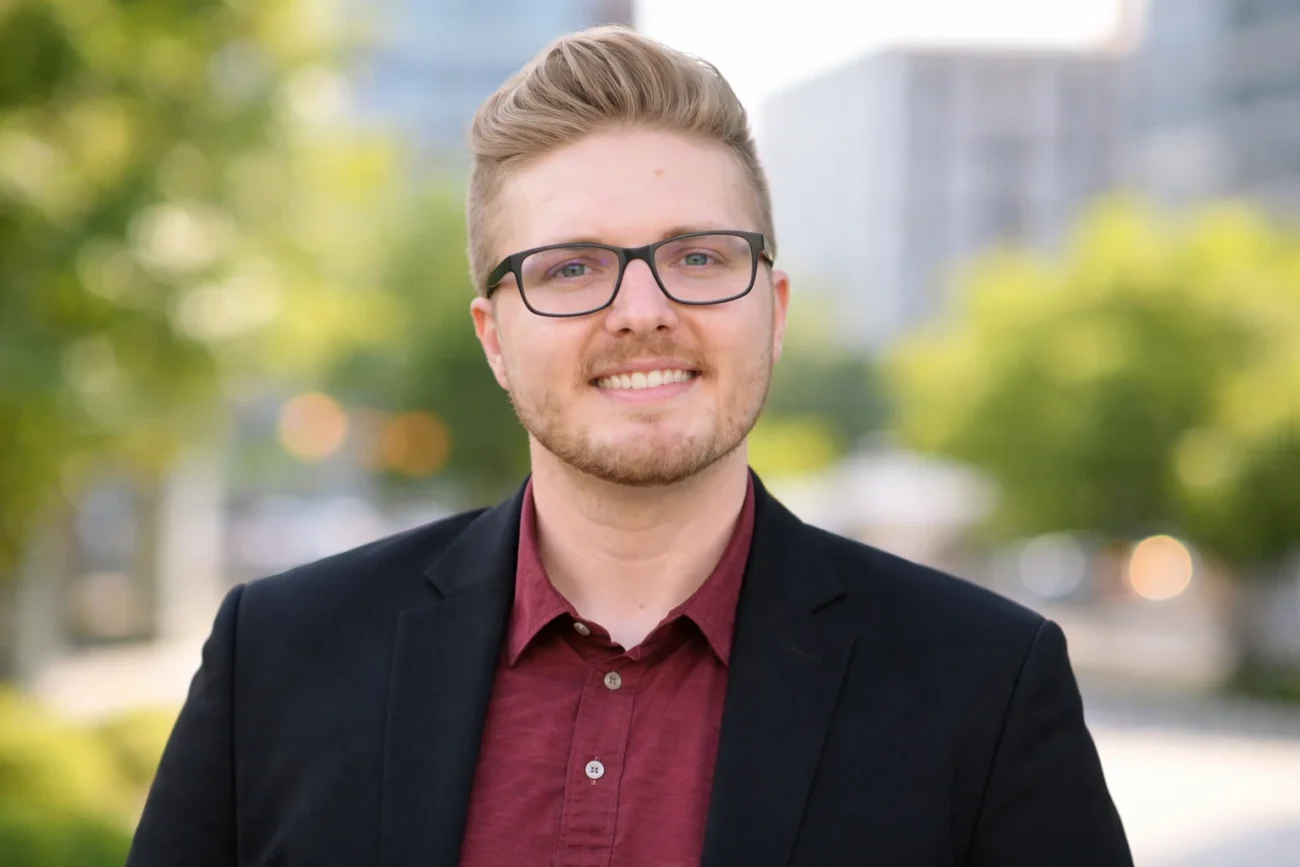
Brody Tate does not look like the kind of name that should generate so much curiosity online. He is not a film star, a tech founder, or a politician with a national platform. Yet search his name and you find a steady stream of interest—partly because of his quiet proximity to celebrity, and partly because the facts that can be confirmed about him point to a life shaped less by publicity and more by education, research, and institutional work.
That contrast—between what people expect to find and what the record actually shows—is what makes Brody Tate worth understanding. He is, in the clearest terms available, an academic professional and educator working in online graduate education, with a scholarly focus on identity, representation, and equity. But he is also a private individual whose personal life has been widely speculated about, often with more confidence than evidence. The story that emerges is not one of fame, but of a modern public figure shaped by the internet’s habit of filling in blanks.
Early Life and Background
Public information about Brody Tate’s early life is limited, and that absence is itself part of the story. Unlike actors or public officials, Tate has not built a career that requires a detailed personal narrative in the public domain. There are no widely verified interviews outlining his childhood, no confirmed accounts of his hometown or family upbringing in mainstream reporting.
What can be inferred, carefully, is that his academic trajectory suggests a long-term commitment to education and social inquiry. His later work—particularly his doctoral research—indicates sustained engagement with questions of identity, belonging, and institutional culture. These themes rarely emerge suddenly; they tend to grow from personal experience, academic exposure, or both.
That said, any attempt to reconstruct his early life beyond what is documented would cross into speculation. The most responsible approach is to acknowledge the gap. Tate’s public profile begins not with childhood anecdotes or early fame, but with his professional and academic footprint.
Education and Academic Formation
Brody Tate’s academic record provides the most concrete window into his intellectual development. He earned a Doctor of Education (EdD) from Loyola University Chicago in 2025, a milestone that marks years of graduate-level study and research. His dissertation, titled Mirrors and Windows: Exploring Queer Identity Representation in Graduate Curriculum, is one of the strongest pieces of publicly available evidence about his work.
The dissertation examines how queer graduate students experience representation—or the lack of it—within academic programs. It argues that curriculum often fails to reflect diverse identities, leaving students without meaningful connections between their lived experience and their coursework. This is not abstract theory; it is grounded in student perception and institutional practice.
What’s surprising is how directly this work connects to ongoing debates in higher education. Universities across the United States and beyond are grappling with questions about inclusion, curriculum design, and student engagement. Tate’s research places him squarely within that conversation, focusing on how representation shapes both learning and belonging.
His academic formation also includes earlier professional experience at institutions such as Loyola University Chicago and Academic Programs International. These roles suggest that his education was not confined to theory, but intertwined with the practical realities of running programs, supporting students, and navigating institutional structures.
Career in Higher Education
Brody Tate’s career has developed primarily within higher education administration, a field that rarely attracts public attention but plays a crucial role in how universities function. He currently serves as Program Manager, Online, for the Master of Science in Applied Data Science program at the University of Chicago’s Data Science Institute.
That title might sound administrative, but it carries significant responsibility. Online graduate programs are complex systems involving curriculum coordination, student support, faculty collaboration, and technology integration. Program managers often act as the connective tissue that keeps these elements aligned.
Tate’s work, based on available descriptions, focuses on online learning environments and student experience. This includes ensuring that programs remain accessible, responsive, and aligned with broader institutional goals. It also places him at the intersection of education and technology, where questions about data, ethics, and pedagogy are increasingly urgent.
In 2025, Tate was involved in discussions at the UPCEA conference, a major gathering focused on professional, continuing, and online education. His participation in conversations about ethics in data science and artificial intelligence reflects a broader shift in higher education, where administrators and educators must grapple with rapidly changing technological tools.
Here’s where it gets interesting. While many people searching his name expect a story tied to entertainment or celebrity, Tate’s actual professional work is embedded in one of the most significant transformations in modern education: the expansion and evolution of online learning.
Research Interests and Scholarly Contributions
Tate’s academic work extends beyond his dissertation. He has contributed to scholarly publications that explore the experiences of queer students, particularly those from rural backgrounds. These contributions highlight recurring themes in his work: identity, belonging, resilience, and the ways institutions can better support marginalized populations.
One co-authored chapter from 2024 examines how queer students from rural areas navigate higher education. It addresses the challenges they face, including isolation, cultural dislocation, and limited representation, while also emphasizing the strengths and adaptability these students bring to academic environments.
Another contribution, published in 2025, explores the connection between queer identity, rural life, and nature. This work suggests that identity is not only shaped by social structures but also by place and environment. It offers a more expansive view of how individuals understand themselves within both physical and institutional spaces.
The truth is, these are not fringe topics. They are central to ongoing discussions about diversity and inclusion in education. Tate’s work contributes to a growing body of research that asks universities to rethink how they design programs, support students, and define success.
Public Curiosity and Media Attention
Much of the public interest in Brody Tate stems from his reported relationship with comedian and actor Janeane Garofalo. Across many online sources, he is described as her husband, often with specific details about their marriage. These claims are widespread and frequently repeated.
But here’s the thing. The strongest available sources about Tate—university profiles, academic publications, and institutional records—do not center on his personal life. They focus on his professional role and scholarly work. This creates a gap between what people search for and what can be firmly verified.
That gap has been filled by a wave of low-authority biography pages that present detailed personal information, including age, birthplace, and financial status, often without clear sourcing. These pages tend to echo one another, creating the impression of consensus where there may be little independent verification.
A careful reader should approach these claims with caution. The repetition of a detail across multiple websites does not guarantee its accuracy. In Tate’s case, the most reliable information remains tied to his academic and professional record, not to personal narratives that lack strong sourcing.
Personal Life and Privacy
Brody Tate appears to maintain a deliberately low public profile, especially when it comes to his personal life. This is not unusual for someone working in academia, where professional contributions often matter more than public visibility. However, in an era where personal branding is common, such privacy stands out.
There is limited confirmed information about his family, upbringing, or day-to-day life outside of work. Even the widely circulated claims about his marriage are not strongly documented in high-quality, primary sources. This does not necessarily mean they are false, but it does mean they should be treated carefully.
What’s surprising is how this privacy has shaped his public image. Rather than reducing interest, it has amplified it. The lack of detailed personal information has created space for speculation, turning Tate into a figure defined as much by what is unknown as by what is known.
This dynamic reflects a broader trend in how the internet handles private individuals connected, even loosely, to public figures. When information is scarce, assumptions often take its place.
Financial Profile and Net Worth
There are no widely verified, authoritative figures for Brody Tate’s net worth. Many online sources offer estimates, often presenting them as precise numbers. These figures should be treated as speculative unless supported by credible financial disclosures or reporting.
Based on his role in higher education, it is reasonable to assume that his income aligns with professional salaries in academic administration, particularly within a major institution like the University of Chicago. However, without confirmed data, any attempt to assign a specific net worth would be guesswork.
The broader point is that Tate’s career does not appear to be driven by public-facing commercial ventures or high-profile business activities. His work is rooted in education, research, and institutional leadership, fields that prioritize impact over visibility.
Public Image and Professional Reputation
Within academic and professional circles, Brody Tate’s work reflects a focus on inclusion, ethical practice, and student-centered learning. His involvement in discussions about AI ethics in education suggests engagement with some of the most pressing questions facing universities today.
He is not a public commentator in the traditional sense. There are no widely circulated interviews or opinion columns bearing his name. Instead, his contributions appear through institutional roles, academic writing, and conference participation.
That said, his work aligns with a broader shift in higher education toward more inclusive and reflective practices. As universities confront questions about representation, access, and technological change, professionals like Tate play a key role in shaping how those changes unfold.
His reputation, to the extent it can be assessed publicly, is tied to this work rather than to media visibility. It is a quieter form of influence, but one that can have lasting effects on students and institutions.
Where Brody Tate Is Now
As of the most recent available information, Brody Tate continues to work at the University of Chicago’s Data Science Institute, managing the online MS in Applied Data Science program. His role places him at the center of a growing and evolving area of higher education.
The expansion of online learning has accelerated in recent years, driven by technological advances and changing student needs. Programs like the one Tate manages are part of a broader shift toward flexible, accessible education that reaches students beyond traditional campus boundaries.
At the same time, his academic work suggests ongoing engagement with issues of identity and inclusion. These concerns remain central to debates about the future of higher education, particularly as institutions seek to serve increasingly diverse student populations.
In that sense, Tate’s current position is not static. It sits within a field that is actively changing, shaped by both technological innovation and social expectations.
Frequently Asked Questions
Who is Brody Tate?
Brody Tate is an academic professional and educator working in higher education. He is currently associated with the University of Chicago, where he manages an online graduate program in applied data science. His work focuses on online learning, student experience, and issues of inclusion in education.
What is Brody Tate known for?
He is best known for his work in higher education and his research on queer identity and representation in graduate curriculum. Public interest in his name has also been driven by reports linking him to comedian Janeane Garofalo, though the strongest available information about him remains academic and professional.
What is Brody Tate’s educational background?
Tate earned a Doctor of Education (EdD) from Loyola University Chicago in 2025. His doctoral research examined how queer identities are represented in graduate-level curriculum and how that affects student experience.
Is Brody Tate married to Janeane Garofalo?
Many online sources state that he is, and this appears to be the main reason his name is widely searched. However, high-quality, primary sources about Tate focus on his professional life and do not provide detailed confirmation of his personal relationships, so the claim should be treated with caution.
What does Brody Tate do at the University of Chicago?
He serves as Program Manager for the online Master of Science in Applied Data Science program. His role involves overseeing aspects of program delivery, student support, and coordination within an online learning environment.
What are Brody Tate’s research interests?
His research centers on queer identity, representation in education, rural student experiences, and issues of belonging in academic settings. His work contributes to broader discussions about diversity and inclusion in higher education.
Conclusion
Brody Tate’s story is not one of conventional fame, but it is a story shaped by the tension between public curiosity and private reality. He is a professional whose documented work speaks clearly, even as much of the internet conversation around him drifts into speculation.
His academic contributions and role in higher education offer a more grounded understanding of who he is. They show a focus on inclusion, ethical practice, and the evolving nature of learning in a digital age. These are not flashy credentials, but they are meaningful ones.
What stays with you is the contrast. The person people search for is often framed through celebrity connection, while the person the evidence reveals is defined by scholarship and institutional work. That gap says as much about the internet as it does about Tate himself.
For readers willing to look past the noise, the picture becomes clearer. Brody Tate is not a mystery to be solved, but a professional whose work, though quiet, sits within some of the most important conversations shaping education today.
