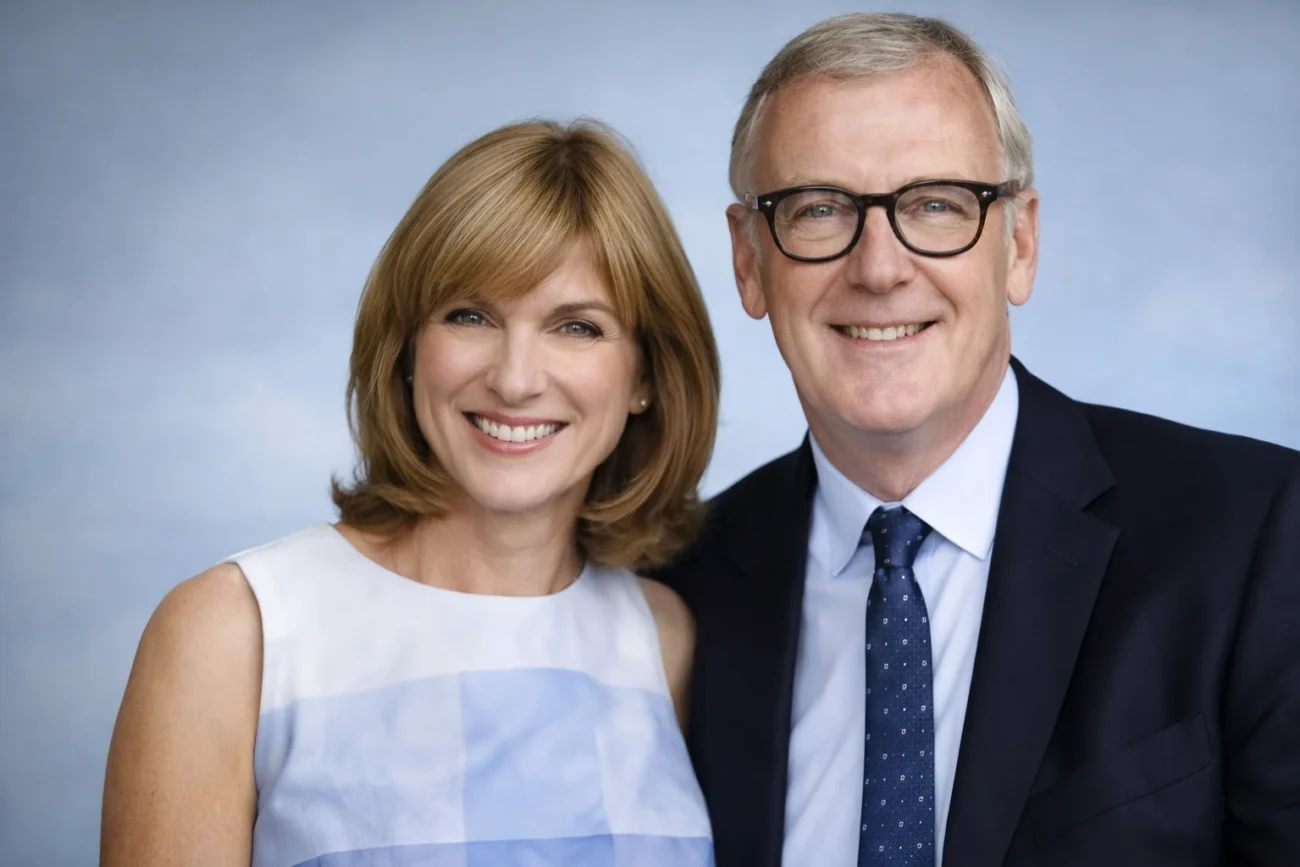
Nigel Sharrocks has spent much of his career in rooms where decisions shape the direction of entire industries, yet his name rarely appears in headlines. That contrast explains why people search for him. He is not a public-facing celebrity, but he has held senior roles across advertising, film, and media governance that have influenced how audiences are measured, how advertising money flows, and how media companies operate behind the scenes. For decades, he has been part of the machinery that keeps the UK’s media economy running.
He is also known to many as the husband of BBC presenter Fiona Bruce, a connection that has brought him occasional public attention. But the truth is that Sharrocks built his own reputation long before that association became widely known. His career spans some of the most significant companies and institutions in British and international media, including MediaCom, Warner Bros. Pictures UK, Aegis Media, and later board-level roles at organizations such as Barb and Digital Cinema Media. The story of Nigel Sharrocks is less about fame and more about sustained influence.
Early Life and Education
Compared with many figures in media and entertainment, Nigel Sharrocks has kept his early life largely out of public view. What can be confirmed is that he was born in August 1956 in the United Kingdom and later pursued higher education at the University of Bath. There, he studied chemistry, a subject that may seem distant from advertising and media but reflects a broader pattern seen among executives who began in analytical disciplines before moving into commercial fields.
Not many people know this, but the path from science to advertising is not as unusual as it appears. The analytical thinking required in chemistry translates well into media planning, where data, measurement, and structured problem-solving are central. While there is little public detail about his upbringing or family background, his academic foundation suggests an early aptitude for disciplined thinking, something that would later define his professional roles.
There are no widely documented accounts of his childhood ambitions or early influences. That absence of detail has led some online profiles to fill in gaps with assumptions, but the verifiable record remains limited. What can be said with confidence is that Sharrocks entered the workforce during a period when advertising and media were undergoing rapid change, and he found his footing in that evolving environment.
Entry into Advertising and Early Career
Sharrocks began his career in advertising, working his way into senior roles during a time when the industry was shifting from traditional creative-led agencies toward more data-driven media planning. He held positions at Grey Advertising, one of the major global agency networks, where he gained experience in media strategy and client management.
This period of his career coincided with a broader transformation in the advertising world. Agencies were beginning to separate media buying and planning into specialized units, recognizing that the complexity of television, print, and emerging digital channels required focused expertise. Sharrocks was part of that generation of professionals who helped shape this transition.
His work in these early years built the foundation for what would become a long association with MediaCom, one of the most influential media agencies to emerge from the UK. While detailed accounts of his day-to-day responsibilities are not widely published, corporate biographies later credited him with playing a founding role in the development of MediaCom Group. That connection would become one of the defining elements of his professional identity.
Building MediaCom and Rising Influence
MediaCom grew into one of the largest media planning and buying agencies in the world, eventually becoming part of WPP, one of the global advertising giants. Sharrocks’ involvement in its early development placed him at the center of a significant shift in how advertising budgets were managed and deployed.
The truth is, MediaCom represented a new way of thinking about media. Instead of treating it as a support function within creative agencies, it became a business in its own right, focused on data, audience behavior, and measurable outcomes. Executives like Sharrocks helped push that model forward, working with major clients and adapting to a media environment that was becoming more fragmented and more competitive.
While he did not cultivate a public persona during this time, his reputation within the industry grew steadily. He became known as someone who could operate across both strategic and commercial dimensions, balancing client needs with broader market trends. That reputation would open doors to more senior leadership roles in the years that followed.
Warner Bros. Pictures UK: A Shift into Film
In 1999, Sharrocks made a significant career move by joining Warner Bros. Pictures UK as managing director. This marked a transition from agency work into the world of film distribution and studio operations. It was a shift that required a different set of skills, including managing theatrical releases, marketing campaigns, and relationships with cinema exhibitors.
Running the UK arm of a major Hollywood studio is a demanding role. It involves coordinating global film strategies with local market realities, ensuring that major releases perform strongly in a competitive environment. During his tenure, Sharrocks was responsible for overseeing the commercial performance of Warner Bros. films in one of the world’s key cinema markets.
Here’s where it gets interesting. His move into film was not a departure from advertising but an extension of it. Film distribution relies heavily on marketing and audience engagement, areas where Sharrocks already had deep experience. His time at Warner Bros. strengthened his understanding of the entertainment side of media, complementing his earlier work in advertising.
Leadership at Aegis Media
After leaving Warner Bros. in 2004, Sharrocks joined Aegis Media, another major player in the global advertising and media industry. He rose to become chief executive of Aegis Media Global Brands, overseeing networks such as Carat, Vizeum, and Posterscope.
This was one of the most prominent phases of his career. Aegis was expanding internationally, and the rise of digital advertising was reshaping the industry. As part of the executive leadership team, Sharrocks was involved in steering the company through a period of significant change.
One of the key moments during his time at Aegis came in 2012, when the company was acquired by Japanese advertising group Dentsu in a deal valued at over $3 billion. Sharrocks played a role in that transaction as part of the leadership team, marking a major milestone in the consolidation of the global advertising market.
The numbers tell a clear story. Being part of such a high-profile acquisition placed him among the senior executives trusted with major strategic decisions. It also reinforced his position as a figure capable of operating at the highest levels of the media business.
Transition to Board and Chair Roles
Following his executive career, Sharrocks moved into a series of non-executive and chair positions. This transition is common among senior industry figures, but in his case, the roles he took on were particularly influential.
In 2013, he was appointed chairman of Barb, the UK’s television audience measurement body. Barb provides the data that broadcasters, advertisers, and agencies rely on to understand viewing habits. Its work underpins billions of pounds in advertising spend, making it one of the most important institutions in the British media ecosystem.
Sharrocks’ appointment reflected his experience across multiple sectors of the industry. He brought a perspective shaped by advertising, film, and global media networks, allowing him to navigate the competing interests of broadcasters, advertisers, and regulators.
He also became non-executive chairman of Digital Cinema Media (DCM), the company responsible for cinema advertising in the UK. That role drew on his earlier experience at Warner Bros. and his broader understanding of how advertising interacts with entertainment platforms.
Continued Influence in Media and Data
In later years, Sharrocks has remained active through board roles in companies focused on data-driven marketing and media strategy. He has served as chairman of Silverbullet, a firm specializing in marketing technology and data solutions, and has been associated with Local Planet, an international media network.
What’s surprising is how relevant his experience remains in an industry that has changed dramatically. The rise of streaming, digital platforms, and privacy regulations has transformed how media is consumed and measured. Yet Sharrocks’ background in both traditional and modern media has allowed him to stay involved in shaping how these changes are managed.
His work with Barb is particularly significant in this context. As viewing habits shift across platforms, the need for reliable audience measurement has become more complex. Sharrocks has been part of efforts to ensure that industry standards keep pace with these changes, maintaining trust in the data that underpins the media economy.
Personal Life and Marriage to Fiona Bruce
Nigel Sharrocks’ personal life entered the public spotlight primarily through his marriage to Fiona Bruce, one of the BBC’s most recognizable presenters. The couple met in the early 1990s while Bruce was working in advertising, and they married in July 1994.
They have two children and have largely kept their family life private. Bruce has occasionally spoken about their relationship in interviews, describing a long-standing partnership that has balanced demanding careers with family responsibilities. Sharrocks himself has rarely given interviews, and he does not maintain a public profile in the way many media figures do.
That said, their relationship has drawn interest because of Bruce’s prominence. She is known for presenting programs such as BBC News at Ten and Antiques Roadshow, as well as moderating Question Time. Sharrocks’ connection to her has led many readers to look him up, even if his own career stands independently.
The truth is, their partnership reflects two different sides of the media world. Bruce represents the public-facing side, while Sharrocks operates behind the scenes. Together, they offer a rare glimpse into both dimensions of the industry.
Public Image and Industry Reputation
Sharrocks has built a reputation as a steady, pragmatic figure in media. He is not associated with controversy or outspoken public commentary, and he has generally avoided the spotlight. That approach has contributed to a perception of him as a reliable leader rather than a high-profile personality.
Within the industry, his career is often seen as an example of longevity and adaptability. He has moved across different sectors while maintaining relevance, a quality that is not always easy to sustain in a rapidly changing field.
There is little evidence of major controversies or public disputes connected to his name. That absence does not mean his career has been without challenges, but it does suggest a style of leadership focused on stability and consensus rather than confrontation.
Business Interests and Net Worth
Public information about Sharrocks’ personal finances is limited. Unlike publicly traded executives who disclose compensation, his roles have often been at the board level or within private companies. As a result, any figures regarding his net worth are estimates rather than confirmed facts.
Various online sources attempt to assign a net worth to him, but these figures should be treated with caution. Without verified financial disclosures, it is more accurate to say that his long career in senior media roles likely places him in a comfortable financial position, rather than to cite specific numbers.
His business interests are better understood through his board positions and leadership roles. These include involvement in companies focused on advertising, media strategy, and data, reflecting a continued engagement with the commercial side of the industry.
Where Nigel Sharrocks Is Now
As of the mid-2020s, Sharrocks remains active in the media sector through his chair and board roles. He continues to be associated with Barb, where he has overseen leadership transitions and strategic direction, as well as with companies like Silverbullet and Digital Cinema Media.
His current work centers on governance rather than day-to-day operations. That shift reflects both his experience and the stage of his career, allowing him to contribute strategic insight without being involved in the daily management of businesses.
But here’s the thing. Influence at this level is often subtle. It comes through decisions about leadership, strategy, and industry standards rather than public statements or visible actions. Sharrocks’ continued presence in these roles suggests that his judgment is still valued in a media landscape that continues to evolve.
Frequently Asked Questions
Who is Nigel Sharrocks?
Nigel Sharrocks is a British media and advertising executive known for his roles in companies such as MediaCom, Warner Bros. Pictures UK, and Aegis Media. He has also served as chairman of organizations like Barb and Digital Cinema Media.
What is Nigel Sharrocks known for?
He is known for his long career in the media industry, particularly in advertising and audience measurement. His work has influenced how media is planned, bought, and evaluated in the UK and internationally.
Is Nigel Sharrocks married?
Yes, he is married to BBC presenter Fiona Bruce. The couple married in 1994 and have two children.
What companies has Nigel Sharrocks worked for?
He has worked for Grey Advertising, MediaCom, Warner Bros. Pictures UK, and Aegis Media. He has also held board roles at Barb, Digital Cinema Media, Silverbullet, and other organizations.
What is Nigel Sharrocks’ net worth?
There is no publicly confirmed figure for his net worth. Estimates exist online, but they are not based on verified financial disclosures and should be treated cautiously.
Is Nigel Sharrocks still active in the media industry?
Yes, he remains active through board and chair roles, particularly in organizations related to media measurement and advertising strategy.
Conclusion
Nigel Sharrocks represents a kind of influence that often goes unnoticed by the wider public. His career has unfolded largely out of view, yet it has intersected with some of the most important developments in modern media. From advertising agencies to film studios and industry bodies, he has worked at points where strategy and commerce meet.
His story is not one of sudden fame or dramatic reinvention. It is a steady progression through roles that require judgment, adaptability, and a deep understanding of how media works. That consistency has allowed him to remain relevant even as the industry around him has changed.
What stands out is his ability to move between different parts of the media ecosystem while maintaining a coherent career path. Few executives manage to bridge advertising, film, and audience measurement with equal credibility. Sharrocks has done so without drawing attention to himself, which may be why his name prompts curiosity when it appears.
Today, he remains a figure whose work continues to shape the structures behind media consumption. For readers who want to understand how the industry functions beyond what appears on screen, Nigel Sharrocks offers a clear example of where real influence often resides.
