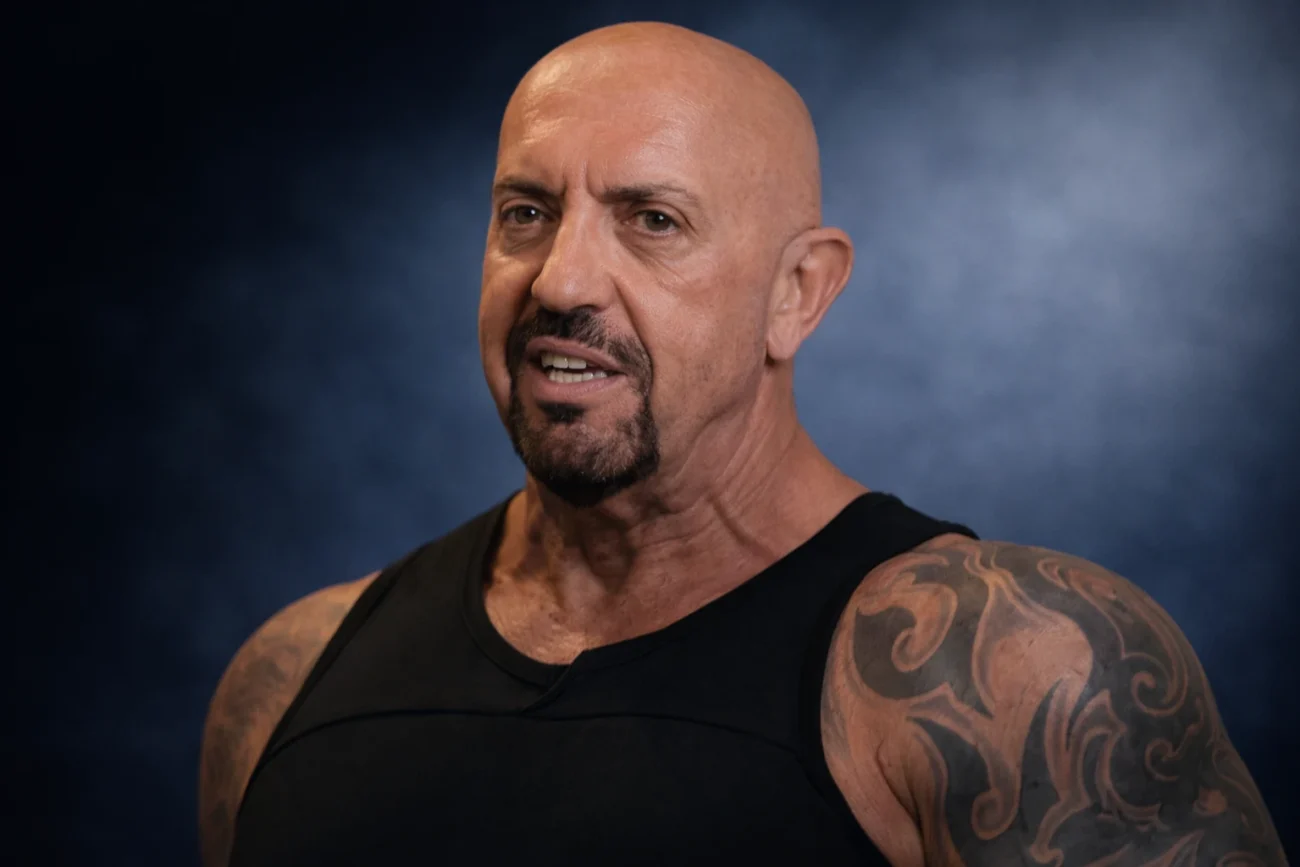
On podcast microphones and book jackets, Marcus Redwood is often introduced in stark, cinematic terms: a “gangster doorman,” a man who survived thousands of fights, someone who claims to have brushed shoulders with figures from Britain’s underworld. The persona is vivid, almost theatrical. But behind that image sits a quieter, more grounded reality—a Kent-based security operator whose life traces the evolution of Britain’s nightclub door trade from its rougher past into a regulated industry.
Understanding Marcus Redwood means holding both versions at once. He is a businessman with documented ties to security companies and a public storyteller shaping his own legend. He is also a figure whose most dramatic claims remain largely self-reported, repeated across podcasts, book descriptions, and biography-style profiles rather than firmly established in traditional reporting. That tension—between verifiable record and personal narrative—is what makes his story compelling.
Early Life and Family
Marcus Joseph Redwood was born in October 1962 in England, though detailed records of his early life remain limited. Public accounts place his upbringing in or around Kent, a county in southeast England that would later become the base of his business operations. Like many figures who emerge from working-class trades, Redwood’s early years are described more through anecdote than documentation.
In promotional material for his memoir, Redwood describes a childhood marked by bullying and isolation, growing up in a rural or semi-rural environment near Ramsgate. These accounts portray a young boy who found confidence through physical training, particularly boxing, which later shaped his identity as a doorman and security figure. While these details are consistent across multiple summaries, they are largely drawn from his own telling rather than independent sources.
What can be said with more certainty is that Redwood’s formative years unfolded during a period when Britain’s nightlife economy was expanding rapidly. By the late 1970s and early 1980s, pubs and clubs relied heavily on informal security—often young men with physical presence rather than formal training. Redwood appears to have entered that world at a relatively young age, setting the stage for a long career.
Entering the Door Trade
Redwood’s early work as a nightclub doorman reflects a time when the role carried little oversight and often blurred into physical enforcement. The “door trade,” as it is commonly known in the UK, was not yet governed by the licensing systems that would later define it. Instead, it relied on reputation, physical strength, and connections within local nightlife circuits.
According to Redwood’s own accounts, he began working doors in his late teens or early twenties, quickly gaining a reputation for handling difficult situations. These early years are central to the persona he presents today: a man shaped by confrontation, capable of maintaining control in volatile environments. But here’s the thing—the specifics of these experiences are difficult to verify independently, and most details come from retrospective storytelling.
What is less disputed is the broader context. During the 1980s and early 1990s, many UK doormen operated in environments where violence was not uncommon, and where informal ties to criminal figures could exist. Redwood’s narrative places him firmly within that world, though the extent of those connections remains unclear from publicly available evidence.
Building a Security Business
By the early 1990s, Redwood had begun transitioning from individual doorman work into business ownership. The Marc-One Security brand, which is still associated with his name, states that it was established in 1990. The company presents itself as a provider of security services across Kent, Sussex, and beyond, suggesting a shift from local nightlife work to broader contract security.
This move mirrors a wider change in the industry. As the UK introduced licensing requirements for security personnel, particularly through the Security Industry Authority (SIA) in the early 2000s, many former doormen repositioned themselves as professional operators. Redwood appears to have been part of that transition, building a business that emphasized structure, staffing, and compliance.
Official records support at least part of this trajectory. Companies House filings list a Marcus Joseph Redwood as a director of multiple security-related entities, including Pro-Tech Security (UK) Limited, where he remains active. Another company, Marc-One Security Services Ltd, appears in filings as a dissolved entity, though the brand continues to exist online.
These records do not tell a full story, but they confirm that Redwood’s career extends beyond personal reputation into formal business operations. They also suggest longevity, with involvement in the sector spanning decades rather than a short-lived period of notoriety.
Reputation, Storytelling, and the Rise of a Public Persona
In recent years, Redwood has stepped into a more visible role as a storyteller. Podcast appearances, video interviews, and promotional content have introduced him to a broader audience beyond the security industry. These platforms often frame him as a veteran of Britain’s most dangerous nightlife environments, someone who has “seen it all” and survived.
The tone of these appearances is striking. Redwood speaks in vivid, often blunt language about violence, loyalty, and survival. He recounts incidents involving weapons, confrontations, and alleged encounters with well-known figures from Britain’s criminal past. The stories are compelling, and they have helped build a following among listeners drawn to true-crime and underworld narratives.
But the truth is, these accounts exist in a space where verification is limited. Many of the most dramatic claims—thousands of fights, assassination attempts, and close ties to infamous gangland figures—are repeated across platforms without independent confirmation. That does not make them false, but it does mean they should be approached as personal testimony rather than established fact.
This distinction matters because Redwood’s public image is now shaped as much by media as by lived experience. The line between the man and the persona has become part of the story itself.
The Memoir Big Guy
Redwood’s transition from podcast guest to published author marks a new phase in his public life. His memoir, Big Guy, scheduled for release in June 2026 by Mirror Books, promises to bring his story into a more structured format. Book descriptions present it as a candid account of his journey from a bullied youth to a dominant figure in the door trade.
The narrative outlined in promotional material follows a familiar arc. It begins with hardship, moves through physical transformation and entry into the nightlife world, and builds toward a career defined by confrontation and survival. The tone suggests a mix of autobiography and cautionary tale, aimed at readers interested in both personal resilience and the darker edges of British nightlife history.
Here’s where it gets interesting. A published memoir can serve as both a platform and a test. It allows Redwood to present his story in full, but it also invites scrutiny. Readers, journalists, and industry observers will have more material to examine, compare, and question.
Whether Big Guy reinforces Redwood’s reputation or reshapes it will depend on how it is received and how closely its claims can be aligned with external evidence. For now, it stands as a key moment in his evolving public identity.
Personal Life and Privacy
Unlike many public figures, Redwood has kept his private life largely out of the spotlight. There is little confirmed information about his family, relationships, or personal circumstances beyond what he has chosen to share in interviews and promotional material. This absence of detail is not unusual for individuals whose careers were built outside traditional media or entertainment industries.
What is clear is that Redwood’s identity has been closely tied to his work. His public persona emphasizes strength, resilience, and experience in high-pressure environments. Personal relationships, if discussed at all, tend to appear in the background rather than as central elements of his story.
This approach may be intentional. In a field where reputation can be closely linked to authority and control, maintaining a degree of privacy can reinforce a professional image. It also limits the amount of verifiable information available, which contributes to the broader ambiguity surrounding his life.
Business Interests and Estimated Net Worth
Redwood’s primary business interests appear to lie in the security sector, particularly through his involvement with companies like Pro-Tech Security and the Marc-One brand. These operations suggest income derived from contract security services, staffing, and potentially consultancy within the industry.
There are no publicly confirmed figures for his net worth, and estimates that appear online should be treated with caution. Without audited financial disclosures or detailed reporting, any attempt to assign a precise figure would be speculative. What can be said is that long-term involvement in a successful security business can provide a stable income, particularly if contracts extend across multiple venues or regions.
His growing media presence may also contribute to earnings, especially as podcast appearances, speaking engagements, and book sales become part of his profile. This combination of business and media activity reflects a broader trend among former industry figures who turn personal experience into marketable content.
Public Image and Cultural Context
Redwood’s public image sits at the intersection of authenticity and performance. He presents himself as a product of a harsher era, someone shaped by real experiences in a demanding environment. At the same time, the way those experiences are shared—through dramatic storytelling and promotional framing—aligns with the expectations of modern audiences.
This duality is not unique to Redwood. The UK has seen a growing appetite for stories from former doormen, ex-prisoners, and individuals connected to the edges of the law. Podcasts and social media platforms have created space for these voices, turning personal histories into widely consumed narratives.
Redwood fits neatly into that pattern. His story resonates because it offers a glimpse into a world that is both familiar and distant—a nightlife culture that many recognize but few fully understand. His ability to communicate that experience, whether entirely factual or partly shaped by memory, is a key part of his appeal.
Where Marcus Redwood Is Now
As of 2026, Marcus Redwood remains active in both business and media. His role as a director in a security company suggests ongoing involvement in the industry, while his upcoming book indicates a continued push into public storytelling. These two strands—operator and narrator—now define his current position.
He is no longer just a figure within the door trade. He is a commentator on it, a representative of its past, and a participant in its cultural afterlife. That shift reflects both personal choice and broader changes in how such stories are told and consumed.
What happens next will likely depend on how his memoir is received and whether further reporting brings greater clarity to his claims. For now, he occupies a space that is part documented reality, part constructed legend.
Frequently Asked Questions
Who is Marcus Redwood?
Marcus Redwood is a British security businessman and former nightclub doorman associated with Kent. He is known for his involvement in companies such as Pro-Tech Security and for his growing presence in podcasts and media discussing the UK door trade.
What is Marcus Redwood known for?
He is primarily known for his career in nightclub security and for sharing stories about that experience through interviews and media appearances. His upcoming memoir, Big Guy, is expected to further define his public image.
Is Marcus Redwood’s story fully verified?
Not entirely. While his business involvement is supported by official records, many of the more dramatic elements of his story come from his own accounts and have not been independently confirmed.
Does Marcus Redwood still work in security?
Yes, he appears to remain active in the security industry through his role as a company director and through ongoing business operations linked to his name.
What is Big Guy about?
Big Guy is Marcus Redwood’s memoir, scheduled for release in 2026. It tells the story of his life in the UK door trade, including his early struggles, career, and experiences in nightlife security.
What is Marcus Redwood’s net worth?
There is no publicly confirmed figure for his net worth. Estimates found online are speculative and should be treated with caution.
Conclusion
Marcus Redwood’s life sits at an unusual intersection of fact and storytelling. He is clearly a real figure with decades of experience in the UK security industry, backed by business records and ongoing professional activity. At the same time, the stories that define his public image remain largely shaped by his own voice.
That tension does not diminish his story. If anything, it makes it more reflective of the world he comes from—a place where reputation carries weight and where truth is often told through memory rather than documentation. Readers approaching his biography are best served by keeping both perspectives in mind.
As his memoir reaches the public, there will be more material to assess, question, and understand. Whether it confirms the legend or reshapes it, Marcus Redwood’s story is still being written, not just by him, but by those who read and interpret it.
For now, he stands as a figure who represents both a profession and a narrative tradition, one rooted in experience but carried forward through the stories we choose to believe.
