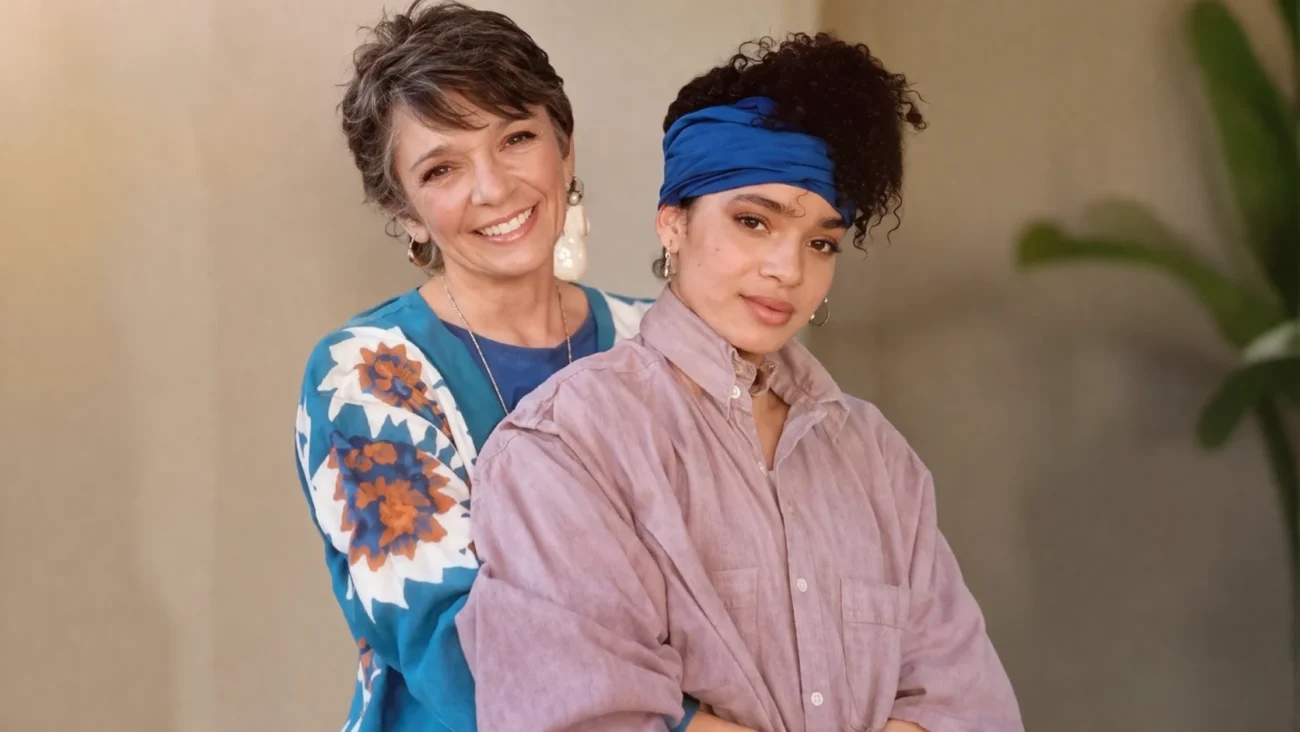
Arlene Litman never sought the spotlight, yet her name continues to surface in conversations about celebrity, identity, and family. She is most often recognized as the mother of actress Lisa Bonet, and by extension, the grandmother of Zoë Kravitz. But reducing her to a footnote in a famous lineage misses the more grounded truth. Arlene Litman lived a private life shaped by work, motherhood, and cultural complexity, raising a daughter who would go on to challenge expectations in Hollywood.
Her story is not one of red carpets or public acclaim. It is quieter, rooted in everyday responsibility and the realities of raising a child across lines of race and culture in late 20th-century America. For many readers, understanding Arlene Litman is less about uncovering hidden fame and more about understanding the foundation behind a family that would later capture public attention.
Early Life and Background
Publicly available information about Arlene Litman’s early life is limited, and that absence is part of her story. She is widely identified as having Ashkenazi Jewish heritage, and most accounts place her birth in the United States in the early 1940s. Beyond that, details about her childhood, her parents, and her upbringing remain largely private or undocumented in mainstream sources.
This lack of detailed public record reflects the fact that Litman was not a public figure. She did not build a career that required media visibility, nor did she participate in interviews that might have preserved her personal history. As a result, much of what is written about her early years comes from secondary or genealogical sources, which vary in reliability.
What can be said with reasonable confidence is that Litman came of age during a period of significant social change in the United States. The decades surrounding her early adulthood saw shifts in gender roles, civil rights, and cultural identity. Those broader changes would later form the backdrop for her own family life, especially as she raised a biracial child in a society still grappling with race.
Education and Career as a Teacher
Arlene Litman is consistently described in biographical summaries as a teacher. Some sources refer to her more specifically as a schoolteacher, while others describe her as a music teacher. The exact nature of her teaching career is not extensively documented in publicly accessible records, but the consistency of this description suggests that education was her primary profession.
Teaching, particularly in the mid-20th century, often involved long-term commitment and a strong connection to community. It was not a profession associated with public recognition, but it carried a quiet influence. For Litman, this role likely provided both financial stability and a structured environment that would later shape her approach to parenting.
What’s interesting is how this professional identity contrasts with the path her daughter would take. Lisa Bonet entered the entertainment industry at a young age, moving into a world of visibility and creative expression. Litman’s work, by contrast, remained grounded and private. That contrast helps explain why so little direct information about her survives, even as interest in her family continues to grow.
Marriage to Allen Bonet and Family Formation
Arlene Litman’s life intersected with the public sphere through her relationship with Allen Bonet, an opera singer of African American heritage from Texas. The two had a daughter, Lisa Bonet, who was born in San Francisco, California, in November 1967. Their relationship did not last long, and they separated when Lisa was still an infant.
The end of that relationship marked a defining shift in Litman’s life. She became the primary caregiver for her daughter, raising Lisa largely on her own. This was not uncommon for the time, but it came with its own challenges, particularly given the cultural context in which they lived.
Lisa Bonet has spoken in interviews about growing up without a close relationship with her father and being raised by her mother. Those accounts consistently place Litman at the center of her daughter’s early life. The family dynamic, shaped by separation and single parenthood, would influence Bonet’s sense of independence and identity.
Raising Lisa Bonet in the San Fernando Valley
After separating from Allen Bonet, Arlene Litman raised Lisa in the San Fernando Valley area of Los Angeles. This setting played a significant role in Bonet’s upbringing. The Valley, during the 1970s and early 1980s, was a suburban environment that did not always reflect the diversity found in other parts of Los Angeles.
Lisa Bonet has described feeling like an outsider during her childhood. As a biracial child in a predominantly white environment, she experienced a sense of not fully belonging to any one group. These reflections, shared in later interviews, provide insight into the social environment in which Litman was raising her daughter.
For Litman, parenting in this context likely involved navigating questions of identity, acceptance, and resilience. While she did not speak publicly about her parenting approach, the outcomes are visible in Bonet’s later life. Bonet developed a strong sense of individuality and a willingness to challenge expectations, traits that often emerge from complex formative experiences.
Supporting a Daughter’s Early Acting Career
Lisa Bonet showed an early interest in acting and began pursuing it as a teenager. She attended the Celluloid Actor’s Studio in North Hollywood, a training ground for young performers. This step marked the beginning of her path into television and film.
Arlene Litman’s role during this period is not extensively documented, but it is reasonable to understand that she provided the support necessary for her daughter to pursue such opportunities. Acting careers, especially for young performers, often require parental involvement, from managing schedules to navigating auditions.
Bonet’s breakthrough came in 1984 when she was cast as Denise Huxtable on The Cosby Show. The role quickly made her a household name. While the public focused on Bonet’s on-screen presence, the foundation that allowed her to reach that point had been built years earlier, during her upbringing under Litman’s care.
Relationship with Lisa Bonet’s Adult Life
As Lisa Bonet’s career expanded, her personal life also became the subject of public attention. She married musician Lenny Kravitz in 1987, and their daughter, Zoë Kravitz, was born in 1988. This next generation would also enter the entertainment industry, further extending the family’s public presence.
Arlene Litman’s role during this stage remained private. She did not become a public figure despite her connection to well-known personalities. There are no widely available interviews or public appearances that detail her perspective on her daughter’s fame or her granddaughter’s career.
That privacy is consistent with the rest of her life. While many parents of celebrities become visible through association, Litman appears to have maintained a clear boundary between her personal life and the public world surrounding her family.
Public Image and Media Portrayal
Arlene Litman’s public image is shaped almost entirely by her association with Lisa Bonet. She is typically described in brief, factual terms in biographies and profiles. There is little in the way of narrative storytelling about her life, largely because she did not participate in the kind of public engagement that generates such material.
In recent years, the growth of online content has led to an increase in articles about her. Many of these pieces attempt to expand her story, sometimes including details that are not clearly sourced. This has created a mix of accurate information and speculation, making it difficult for readers to distinguish between the two.
The truth is simpler and more grounded. Litman was a private individual whose life intersected with public attention through her daughter. Her story does not fit the mold of celebrity biography, and attempts to reshape it into that mold often lead to distortion.
Personal Life, Beliefs, and Privacy
Very little is publicly known about Arlene Litman’s personal beliefs, hobbies, or daily life outside of her role as a mother and teacher. There are no widely documented interviews in which she discusses her views or experiences. This absence is not unusual for someone who did not seek public attention.
What can be inferred is limited and should be approached carefully. Her Jewish heritage is consistently mentioned, suggesting a cultural background that may have influenced her household. Beyond that, details about her personal life remain largely private.
This level of privacy stands in contrast to the openness often associated with celebrity families today. It reflects a different era, one in which not every connection to fame resulted in public exposure.
Financial Status and Net Worth
There is no reliable public information about Arlene Litman’s net worth. As a teacher, her income would have been consistent with that profession, which typically provides stability rather than wealth. Any estimates that appear online should be treated with caution, as they are not supported by verifiable financial records.
Her financial story is also separate from that of her daughter and granddaughter, both of whom have built successful careers in entertainment. While Lisa Bonet and Zoë Kravitz have earned significant income through acting and related work, those achievements do not directly reflect Litman’s own financial standing.
Understanding this distinction helps avoid the common assumption that proximity to fame equates to shared wealth. In Litman’s case, her life appears to have been grounded in ordinary professional work rather than the financial dynamics of the entertainment industry.
Later Life and Passing
Information about Arlene Litman’s later life and passing is limited in mainstream sources. Some genealogical records suggest that she passed away in 1998, but detailed reporting on her death, including cause and circumstances, is not widely available in major publications.
This lack of detailed coverage is consistent with her overall public profile. As someone who did not live in the public eye, her passing did not generate the kind of media attention that accompanies celebrity deaths. Instead, it remains a quiet point in the background of her family’s story.
For readers seeking a complete account, this is one of the areas where the record remains incomplete. It highlights the broader challenge of writing about individuals who were important within their families but not documented extensively in public archives.
Legacy Through Family
Arlene Litman’s legacy is most visible through her daughter and granddaughter. Lisa Bonet’s career, marked by a distinctive presence and a willingness to step away from conventional paths, reflects a sense of independence that likely has roots in her upbringing. Zoë Kravitz’s success in film, television, and music continues that lineage.
But here’s the thing. Legacy is not only about public achievement. It is also about the values, resilience, and perspective passed from one generation to the next. While Litman’s own voice is not widely recorded, her influence can be seen in the lives shaped under her care.
Her story serves as a reminder that not all impactful lives are publicly documented in detail. Some are known primarily through the people they raise and the paths those people take.
Frequently Asked Questions
Who was Arlene Litman?
Arlene Litman was the mother of actress Lisa Bonet. She is commonly described as a teacher and is known primarily through her role in Bonet’s early life and upbringing.
What was Arlene Litman’s profession?
She is widely identified as a teacher. Some sources specify that she may have been a music teacher, but the most consistently supported description is simply that she worked in education.
Was Arlene Litman married?
She had a relationship with opera singer Allen Bonet, with whom she had a daughter, Lisa Bonet. The relationship ended when their daughter was still very young.
Did Arlene Litman have other children?
There is no widely confirmed public information indicating that she had other children besides Lisa Bonet.
When did Arlene Litman die?
Some records suggest she passed away in 1998, but detailed information about her death is not widely documented in major public sources.
What is Arlene Litman’s net worth?
There is no verified information about her net worth. As a teacher, her income would have been modest compared to that of public figures in the entertainment industry.
Conclusion
Arlene Litman’s life does not fit neatly into the kind of biography often associated with public figures. She was not an actress, a performer, or a media personality. She was a teacher and a mother, living a life that remained largely outside the spotlight.
What gives her story meaning is the role she played in shaping a daughter who would go on to become a recognizable figure in entertainment. Lisa Bonet’s independence, complexity, and distinctive presence are part of a larger story that begins with the home in which she was raised.
The gaps in the public record are not flaws in her story. They are reflections of a life lived privately, without the expectation of documentation or attention. That privacy, in itself, is part of what defines Arlene Litman.
In a culture that often equates visibility with importance, her story offers a different perspective. Influence does not always announce itself. Sometimes it is quiet, steady, and visible only in the lives it helps shape.
