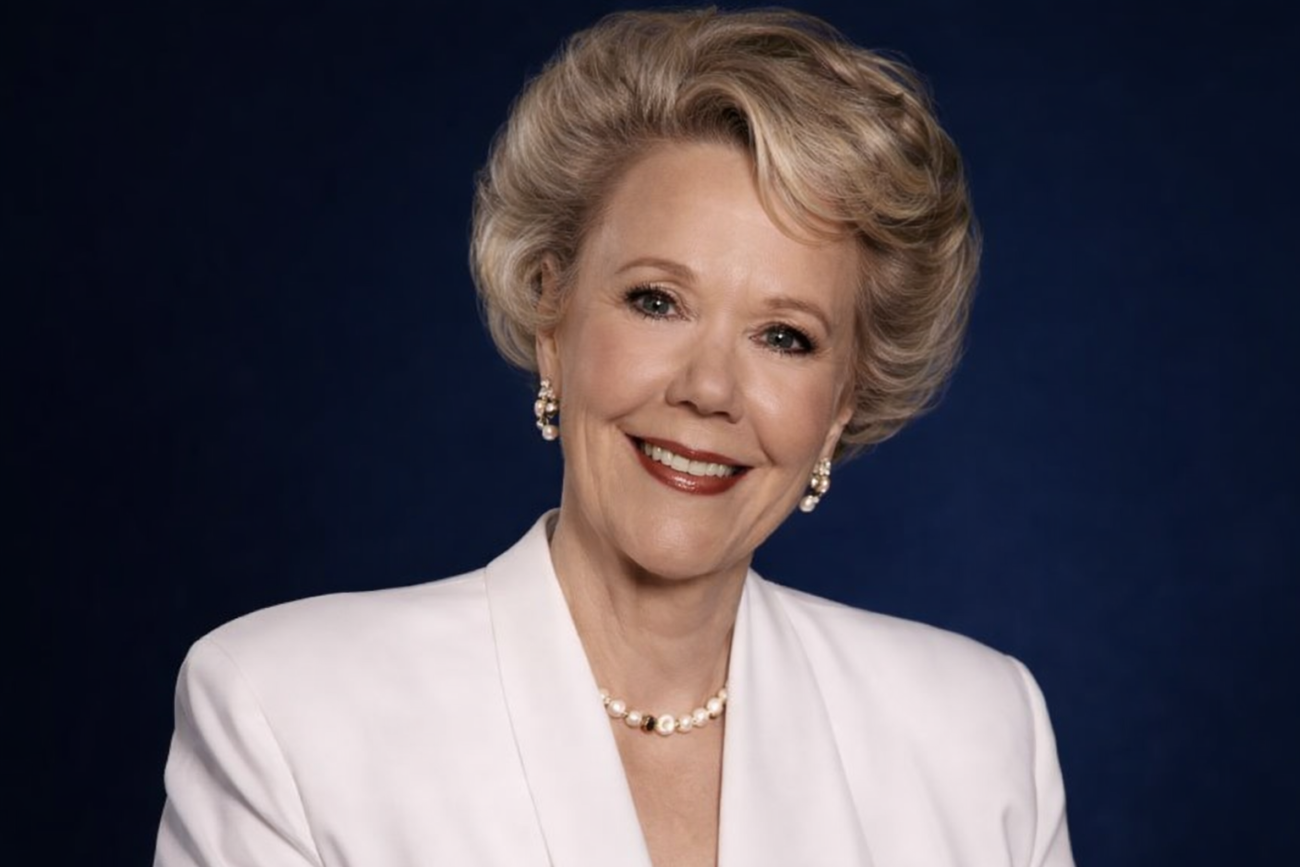
Marilyn Kroc Barg lived her life just offstage from one of the most recognizable business stories in American history. As the only child of Ray Kroc—the man who turned McDonald’s from a regional hamburger stand into a global fast-food empire—her name surfaces often, but her life rarely unfolds in full. The contrast is striking: a father whose career reshaped modern franchising and a daughter who remained largely private, leaving behind a record that is both traceable and incomplete.
That gap has fueled curiosity. Who was Marilyn Kroc Barg beyond her famous surname? What role, if any, did she play in the Kroc legacy? And why does her name continue to appear in conversations about wealth, philanthropy, and family history tied to McDonald’s? The answers are more restrained than many online profiles suggest, but they are also more revealing when placed in proper context.
Early Life and Family Background
Marilyn Janet Kroc was born on October 15, 1924, in Chicago, Illinois, into a working-class Midwestern family that had not yet found its place in American business history. Her father, Raymond Albert Kroc, was still years away from becoming synonymous with McDonald’s. At the time of her birth, he was pursuing a series of sales jobs, including work as a paper cup salesman and later as a distributor for Multimixer milkshake machines.
Her mother, Ethel Janet Fleming, played a central role in shaping the family’s early domestic life. The Krocs were not wealthy during Marilyn’s childhood, and her upbringing reflected a more modest, practical reality than the global brand her father would later build. She grew up in an environment defined by movement and ambition, as Ray Kroc’s early career required persistence and frequent reinvention.
Not many people know this, but Marilyn’s formative years unfolded long before McDonald’s became a household name. By the time her father’s association with the McDonald brothers began in 1954, Marilyn was already an adult. This timing matters because it places her outside the narrative of a child raised within a corporate empire. Instead, she experienced her father’s rise from the perspective of someone who had already begun building a life of her own.
Education and Early Adulthood
Public records offer limited detail about Marilyn’s education, and that absence has often been filled with speculation in later profiles. What can be said with confidence is that she grew up and spent much of her early life in the Chicago area, including time in Evanston, Illinois. Her upbringing likely included the kind of conventional schooling typical for middle-class families of the era, though specific institutions are not consistently documented in widely verifiable sources.
Here’s where it gets interesting. Unlike many children of high-profile business figures today, Marilyn did not grow up under media scrutiny. There were no interviews, no early press coverage, and no public narrative shaping her identity. That relative anonymity meant that her early ambitions and personal interests were never widely chronicled.
As she moved into adulthood, Marilyn’s life followed a path that appears, from the outside, to have been largely private. She did not emerge as a public-facing business figure, nor did she step into the spotlight of her father’s expanding enterprise. That distinction would remain a defining feature of her biography.
Marriage and Personal Life
Marilyn Kroc later became known as Marilyn Kroc Barg following her marriage, though records suggest she may have had more than one marriage over the course of her life. The most firmly documented relationship is with James W. Barg, who is identified as her husband in her obituary. This detail anchors the “Barg” surname in verifiable public record.
Some genealogical sources also reference an earlier marriage to a man named Sylvester Nelson, though the available documentation for this relationship is less direct and should be approached with caution. This pattern—clear confirmation of certain facts alongside more tentative claims—is common in Marilyn’s story.
What emerges from the available evidence is a portrait of someone whose personal life remained largely outside public view. There is no strong, consistent documentation about children, professional pursuits, or public-facing roles. While some modern profiles describe her as deeply involved in various personal or charitable activities, those accounts often lack clear sourcing.
The truth is, Marilyn appears to have lived a life that was intentionally or circumstantially private. In an era before constant media exposure, it was entirely possible for someone connected to a rising business figure to remain largely undocumented in public narratives.
Ray Kroc’s Rise and Its Impact
To understand Marilyn Kroc Barg, it helps to understand the scale and timing of her father’s success. Ray Kroc’s involvement with McDonald’s began in 1954, when he visited a fast-food restaurant operated by brothers Richard and Maurice McDonald in San Bernardino, California. Impressed by their efficient system, he saw an opportunity to expand the concept through franchising.
He opened his first McDonald’s franchise in Des Plaines, Illinois, in 1955. Over the next several years, he built a network of franchises and eventually bought out the McDonald brothers in 1961. From there, the company grew rapidly, becoming a defining force in American business and culture.
But here’s the thing: by the time this transformation was underway, Marilyn was already in her thirties. She was not a child growing up alongside the brand, nor a young adult entering the business at its inception. Instead, she occupied a position that was both close to and separate from the company’s trajectory.
This distance helps explain why she does not appear prominently in official histories of McDonald’s. Those histories focus on Ray Kroc’s business decisions, the expansion of the franchise model, and the development of a global brand. Marilyn’s role, at least in publicly documented terms, was not part of that corporate narrative.
Public Image and Limited Visibility
Marilyn Kroc Barg’s public image is defined as much by absence as by presence. Unlike many family members of major business figures, she did not cultivate a public persona. There are no widely circulated interviews, speeches, or public appearances that define her voice or perspective.
This lack of visibility has had two effects. On one hand, it has preserved a degree of privacy that is rare for someone connected to a figure as prominent as Ray Kroc. On the other, it has created space for speculation and embellishment, particularly in recent years as online biography sites attempt to fill in the gaps.
What’s surprising is how quickly those speculative details can take on the appearance of fact. Claims about her hobbies, professional roles, or philanthropic influence often appear across multiple sites without clear attribution. In reality, the strongest evidence about her life remains rooted in official records such as birth and death notices, family documentation, and the broader historical context of the Kroc family.
Philanthropy and the Kroc Legacy
One of the most persistent areas of confusion involves Marilyn Kroc Barg’s connection to philanthropy. The Kroc name is closely associated with charitable giving, particularly through the Kroc Foundation and later through the extensive philanthropic work of Joan Kroc, Ray Kroc’s third wife.
Ray Kroc established the Kroc Foundation in 1965, focusing on medical research and other causes. After his death in 1984, Joan Kroc became known for her significant philanthropic contributions, including major donations to the Salvation Army and public broadcasting.
Some modern accounts suggest that Marilyn played a meaningful role in shaping this philanthropic legacy. However, there is little strong public evidence to support the idea that she was a central figure in these efforts. The documented history of the Kroc Foundation and related charitable organizations does not prominently feature her as a leader or architect of major initiatives.
That said, family influence can be subtle and difficult to document. It is entirely possible that Marilyn shared in the values that later defined the Kroc family’s charitable identity. But without clear records, those connections remain more interpretive than factual.
Later Years and Death
Marilyn Kroc Barg’s life came to an end relatively early. She died on September 11, 1973, in Arlington Heights, Illinois, at the age of 48. Her death occurred more than a decade before her father’s passing in 1984 and before the most visible phase of the Kroc family’s philanthropic activity.
The available public record does not consistently document the cause of her death. Some sources suggest health-related issues, including diabetes, but these claims are not uniformly supported by primary documentation that is easily accessible. As with many aspects of her life, the details remain partly obscured.
Her obituary, as reproduced in genealogical records, reflects the understated nature of her public presence. It identifies her as Lynn J. Barg, notes her family connections, and mentions private services. There is no extended public narrative, no elaboration on achievements or public roles, and no attempt to frame her life within the larger story of McDonald’s.
Legacy and Historical Perspective
Marilyn Kroc Barg’s legacy is not defined by corporate leadership or public recognition. Instead, it exists in the quieter space of family history, where her connection to Ray Kroc ensures that her name remains part of a much larger story.
The truth is, her life highlights an important dynamic in the histories of major business figures. Not every family member becomes a public figure, and not every life connected to a famous name is documented in detail. In Marilyn’s case, the available record suggests a person who lived largely outside the spotlight, even as her father’s influence grew dramatically.
Her story also serves as a reminder of how easily historical narratives can become distorted. In the absence of detailed records, later accounts may fill in gaps with assumptions, creating a version of events that feels complete but lacks firm grounding.
Frequently Asked Questions
Who was Marilyn Kroc Barg?
Marilyn Kroc Barg was the only child of Ray Kroc, the businessman who built McDonald’s into a global fast-food chain. Born in Chicago in 1924, she lived much of her life outside the public spotlight and is best known through her connection to the Kroc family.
What was Marilyn Kroc Barg’s relationship to McDonald’s?
She was Ray Kroc’s daughter, but there is no strong public evidence that she held a major role in the company’s operations or leadership. McDonald’s history focuses primarily on Ray Kroc’s business activities rather than family involvement.
Was Marilyn Kroc Barg involved in philanthropy?
Some sources suggest she had charitable interests, but there is limited verified evidence placing her at the center of major philanthropic initiatives. The most well-documented Kroc philanthropy is associated with Ray Kroc and Joan Kroc.
When did Marilyn Kroc Barg die?
She died on September 11, 1973, in Arlington Heights, Illinois, at the age of 48. Her death occurred before the later, highly visible phase of the Kroc family’s charitable work.
Was she married?
Yes, she was married to James W. Barg at the time of her death. Some records also suggest an earlier marriage, though details about that relationship are less consistently documented.
Did Marilyn Kroc Barg have children?
Publicly available records do not clearly confirm whether she had children. Some sources make claims about her family life, but these details are not consistently supported by strong documentation.
Conclusion
Marilyn Kroc Barg’s life resists easy storytelling. She was closely connected to one of the most influential business figures of the 20th century, yet she did not become a public figure in her own right. That contrast makes her both intriguing and difficult to define.
Her story reminds us that history often preserves the loudest voices while leaving quieter lives only partially recorded. What remains of Marilyn’s biography is grounded in verifiable facts, framed by context, and shaped by the limits of available evidence.
There is a certain clarity in that restraint. Rather than inflating her role or filling gaps with speculation, the most honest account of Marilyn Kroc Barg is one that respects what is known and acknowledges what is not.
In the end, her place in history is secure not because of public achievements but because of her connection to a defining American business story—and because her life offers a rare glimpse into what it means to stand just outside the spotlight of fame.
