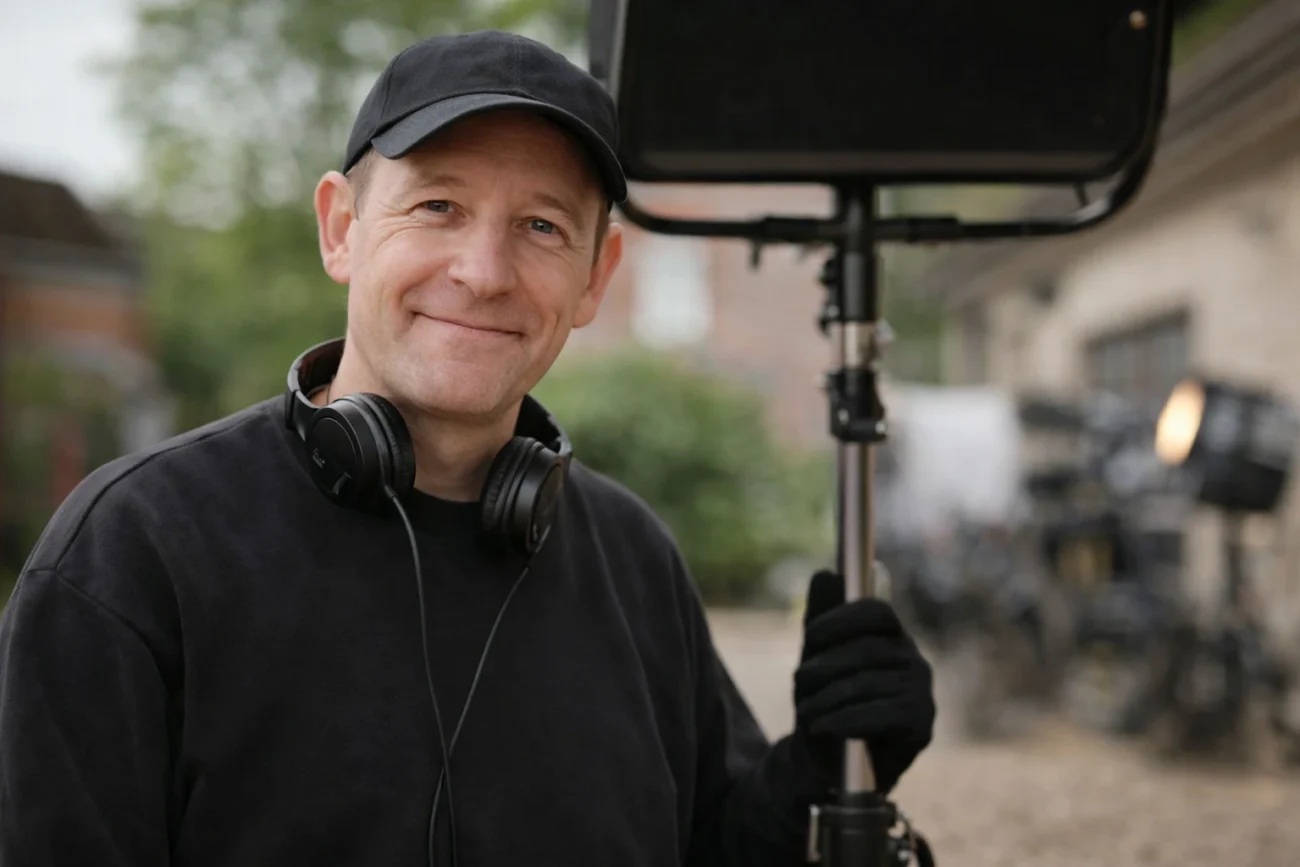
Kevin Corbishley’s name first reached a wide audience not through a headline or a role, but through a quiet moment at the end of a television episode. For many viewers of Ghosts and Call the Midwife, his name appeared in a simple dedication—brief, understated, and deeply personal. That small tribute sparked a larger question: who was Kevin Corbishley, and why did his colleagues feel compelled to honor him so publicly?
The answer leads not to a familiar celebrity story, but to the often unseen world behind the camera. Corbishley was part of the technical backbone of British television, a crew member whose work helped shape the look and rhythm of shows watched by millions. His life and career, while not extensively documented in public records, reflect a kind of professional legacy that rarely makes headlines but quietly sustains the industry.
Early Life and Background
Public information about Kevin Corbishley’s early life is limited, and that absence is itself telling. Unlike actors or public figures whose biographies are carefully chronicled, crew members often leave behind only fragments of their personal histories in the public domain. What is known, based on tribute messages and industry records, is that Corbishley was born in 1965 and spent much of his adult life working in the British television and film industry.
There are no widely confirmed details about his upbringing, family background, or education. No interviews or long-form profiles from his lifetime appear to exist in major media archives. That doesn’t suggest a lack of substance; rather, it reflects the nature of his profession. People in technical roles are often defined by their work and reputation on set rather than by a curated public image.
The absence of personal detail has led some online sources to speculate or fill gaps with generic narratives, but those accounts are rarely supported by verifiable evidence. A careful biography resists that temptation. What matters more is what can be observed through his career: a consistent presence in professional environments that depend heavily on trust, skill, and collaboration.
Building a Career Behind the Camera
Kevin Corbishley worked in what is broadly known as the camera and electrical department, with roles tied to lighting and rigging. These are technical positions that sit at the heart of production but remain largely invisible to viewers. A rigger or lighting technician helps prepare sets, install and manage equipment, and ensure that lighting conditions are both safe and visually consistent across scenes.
His work is credited on projects such as Anna Karenina (2012), Call the Midwife (which began in 2012), and Ghosts (which premiered in 2019). These credits, listed in industry databases like IMDb, provide a skeletal timeline of his professional life. They place him within productions that demand both technical precision and a strong collaborative spirit.
The truth is that careers in this field rarely follow a straightforward public arc. Unlike performers, crew members build their reputations through reliability and word-of-mouth recommendations. Productions often bring back the same technicians season after season because they trust their judgment and work ethic. Corbishley’s involvement in multiple episodes of Call the Midwife and later in Ghosts suggests that he was one of those trusted professionals.
What’s surprising is how little visibility that kind of career generates outside the industry. A viewer might watch dozens of episodes shaped by the work of someone like Corbishley without ever noticing his name—until a tribute brings it into focus.
Work on Call the Midwife
One of the most concrete links in Kevin Corbishley’s career is his work on Call the Midwife, a long-running BBC drama known for its careful period detail and emotional storytelling. Reports indicate that he worked in a rigging role, often described as a standby rigger, within the camera and electrical department.
That role would have placed him at the center of the show’s visual consistency. Period dramas require controlled lighting to maintain authenticity across scenes and episodes, especially when recreating historical settings. The work involves balancing technical demands with the creative vision of directors and cinematographers, often under tight schedules.
Corbishley’s connection to the show became publicly visible after his death in 2022. The season 11 finale included a tribute card reading, “In memory of Kev Corbishley: 1965 – 2022.” The show’s official social media account later described him as “a dearly loved member of our crew,” a phrase that speaks volumes about his standing among colleagues.
That kind of recognition is not automatic. Television productions are fast-paced environments where every role is important, but not every loss is marked on screen. The decision to include a dedication suggests that Corbishley was more than a routine contributor. He was part of the fabric of the production.
Work on Ghosts
Corbishley’s work on Ghosts, the BBC comedy series set in a haunted country house, further illustrates his role within the industry. Reports indicate that he joined the show in its second season as a light rigger, contributing to the technical setup that supports the show’s distinct visual tone.
Ghosts blends humor with supernatural elements, requiring careful lighting to create atmosphere without overshadowing the comedy. That balance is not accidental. It depends on technicians who can translate creative direction into practical setups, often adjusting quickly to changing conditions on set.
In September 2022, the premiere of Ghosts season 4 ended with a tribute: “In loving memory of our friend Kevin Corbishley.” The wording stands out for its warmth. It doesn’t read like a formal acknowledgment; it reads like something written by people who knew him well.
The timing of the tribute also offers context. Reports suggest that Corbishley died near the beginning of filming for that season, meaning his absence would have been felt during production itself. For a crew that works closely together over long hours, that kind of loss is both personal and immediate.
The Nature of His Work
To understand Kevin Corbishley’s career, it helps to look beyond specific credits and consider the nature of his profession. Lighting and rigging crews operate in a space where technical skill meets physical labor and creative collaboration. Their work is often completed before a scene is even rehearsed, yet it determines how that scene will look on screen.
A rigger might spend hours preparing equipment that allows cameras and lights to be positioned safely and effectively. A lighting technician adjusts setups to match the mood of a scene, ensuring continuity across shots filmed hours or even days apart. These tasks require precision, adaptability, and a deep understanding of both equipment and storytelling.
The truth is that this kind of work is built on trust. Directors and cinematographers rely on technicians to execute complex setups without compromising safety or quality. Crew members rely on each other to maintain a smooth workflow in environments where delays can be costly.
Corbishley’s continued presence on established productions suggests that he earned that trust. In an industry where jobs are often freelance and short-term, steady involvement in major series points to a reputation for reliability and competence.
Personal Life and Privacy
There is very little publicly confirmed information about Kevin Corbishley’s personal life, including details about family, relationships, or children. No widely reported interviews or personal statements appear to exist, and no major publications have released a detailed obituary covering his private life.
That absence should not be treated as a gap to be filled with assumption. Many crew members in the film and television industry choose to keep their personal lives private, focusing instead on their work. In Corbishley’s case, the available evidence suggests that his public identity was tied almost entirely to his professional contributions.
What can be inferred, cautiously, is that he was respected not only for his technical abilities but also for his presence on set. The language used in tributes—phrases like “our friend” and “dearly loved”—indicates that he formed meaningful relationships with colleagues. That kind of regard is not easily earned in high-pressure environments.
Privacy, in this context, becomes part of the story. It reflects a career lived largely outside the spotlight, even while contributing to productions that reached wide audiences.
Public Recognition After His Death
Kevin Corbishley’s death in 2022 marked the moment when his name entered public awareness. Before that, his contributions were known primarily within industry circles. The tributes on Call the Midwife and Ghosts changed that, prompting viewers to search for information about him.
The response highlights a recurring pattern in entertainment. Audiences often become aware of behind-the-scenes contributors only when they are gone. Memorial cards act as brief windows into the collaborative nature of production, drawing attention to individuals who would otherwise remain anonymous.
But here’s the thing. Those tributes also carry weight because they are not routine. They are deliberate acknowledgments from teams that want to honor someone publicly. In Corbishley’s case, the fact that two separate productions chose to do so suggests a shared recognition of his importance.
The lack of extensive public records does not diminish that recognition. If anything, it makes it more striking. A single line at the end of an episode was enough to prompt widespread curiosity, which speaks to the emotional impact of the tribute itself.
Industry Context and Legacy
Kevin Corbishley’s career offers a glimpse into a part of the entertainment industry that rarely receives sustained attention. Technical crew members are essential to production, yet their contributions are often overshadowed by on-screen talent.
The structure of the industry reinforces this dynamic. Credits roll quickly, and most viewers do not pause to read them. Careers are built through professional networks rather than public exposure. Recognition comes in the form of continued employment and respect among peers rather than awards or media coverage.
Corbishley’s legacy fits within that framework. He was part of productions that have left a lasting mark on British television. His work helped support stories that resonated with audiences, even if his role remained largely unseen.
What stands out is not a single defining achievement but a pattern of consistent contribution. That kind of legacy is harder to document but no less meaningful. It reflects a career built on reliability, skill, and collaboration rather than on individual spotlight.
Frequently Asked Questions
Who was Kevin Corbishley?
Kevin Corbishley was a British television and film crew member known for his work in lighting and rigging roles. He contributed to productions such as Ghosts, Call the Midwife, and Anna Karenina. His name became widely recognized after on-screen tributes appeared following his death in 2022.
What did Kevin Corbishley do for a living?
He worked in the camera and electrical department, often described as a light rigger or standby rigger. His responsibilities would have included setting up and maintaining lighting equipment, preparing sets for filming, and ensuring visual consistency across scenes. These roles are essential to the technical side of production.
Why was Kevin Corbishley honored on television shows?
Both Ghosts and Call the Midwife included tribute messages after his death, describing him as a valued and well-liked member of their crews. Such tributes are typically reserved for individuals who have made meaningful contributions to a production and formed strong relationships with colleagues.
How old was Kevin Corbishley?
A tribute on Call the Midwife listed his years as 1965 to 2022. Based on that information, he was in his mid-50s at the time of his death. A precise birth date has not been widely confirmed in public sources.
What is known about his personal life?
Very little detailed information about his personal life is publicly available. There are no widely documented records of his family, relationships, or upbringing. This reflects the private nature of many behind-the-scenes professionals in the industry.
What shows did Kevin Corbishley work on?
He is credited with work on Ghosts, Call the Midwife, and the 2012 film Anna Karenina. His roles were technical and behind the camera, contributing to the visual and practical aspects of production.
Conclusion
Kevin Corbishley’s story is not one of fame in the traditional sense. It is a story about work, collaboration, and the quiet influence of people who help bring television to life. His career unfolded largely out of view, yet it left a clear impression on those who worked alongside him.
The tributes that introduced his name to the public were brief, but they carried a depth that longer biographies sometimes struggle to capture. They reflected respect earned over time, in environments where trust and reliability matter as much as technical skill.
His life also serves as a reminder of how much of entertainment depends on unseen labor. Every scene, every shot, and every carefully lit moment is the result of coordinated effort from people whose names may never be widely known. Corbishley was one of those people.
For viewers, his story offers a reason to look a little more closely at the credits, to recognize that behind every familiar face on screen is a network of professionals who make the work possible. His legacy lives not in headlines, but in the shows he helped shape and the colleagues who chose to remember him publicly.
