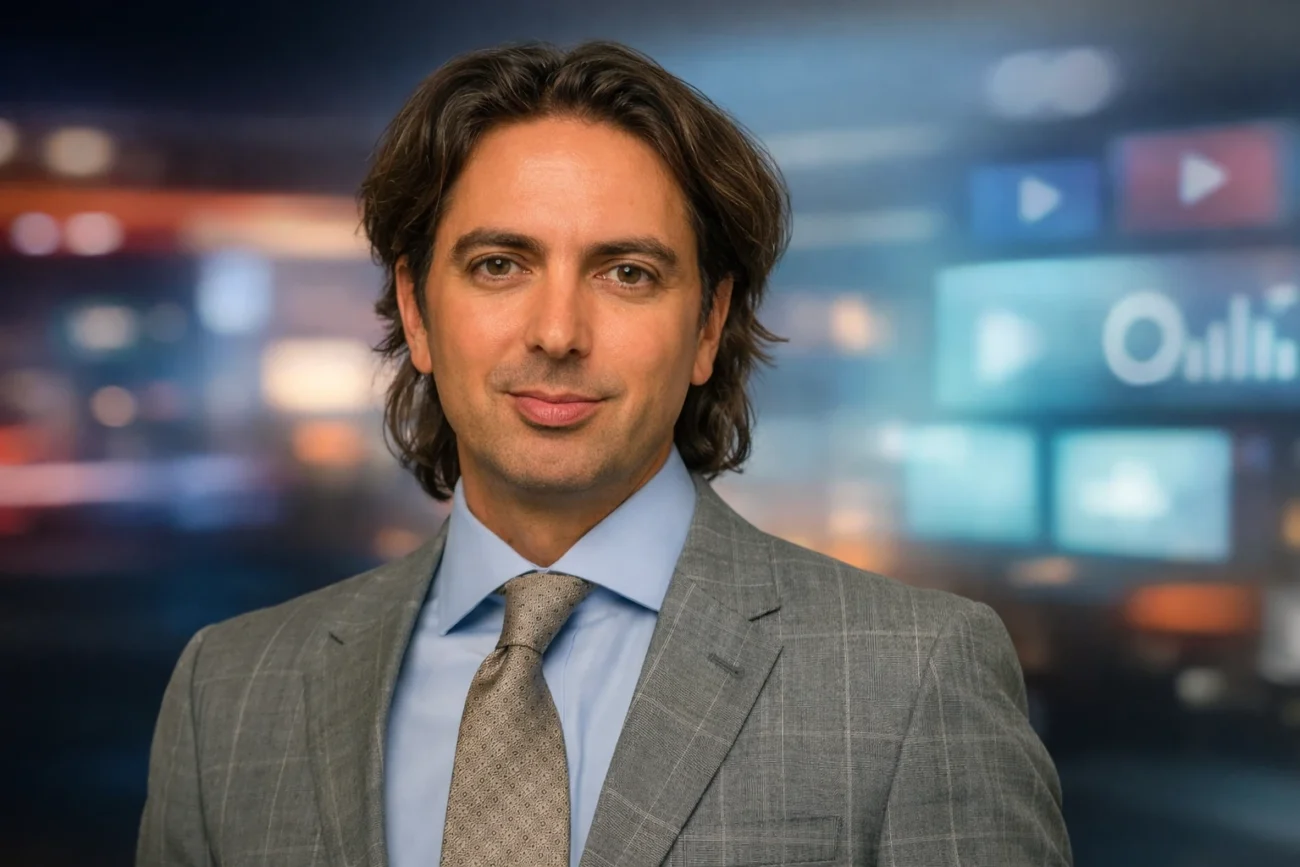
For most viewers, television still feels simple. You switch it on, scroll, and watch. But behind that simplicity sits a complex system of deals, platforms, and decisions that determine what appears on your screen—and what doesn’t. Kieran Clifton is one of the people quietly responsible for that system in the United Kingdom.
He is not a household name, nor someone who courts attention. Yet within the British broadcasting industry, Clifton holds a position of real influence. As the BBC’s Director of Distribution and Business Development, he operates at the intersection of public service broadcasting and the rapidly changing technology that delivers it. His work shapes how BBC content reaches audiences, whether through traditional channels, smart TVs, or new digital platforms.
Clifton’s career offers a useful lens into a broader shift in media. It tells the story of how television moved from aerial signals to internet streams, and how institutions like the BBC are trying to adapt without losing their core purpose. To understand him is to understand how modern broadcasting works—and where it is heading next.
Early Life and Background
Public information about Kieran Clifton’s early life is limited, which is not unusual for senior executives who operate outside the spotlight. Official records identify him as Kieran Oliver Edward Clifton, born in September 1971. Beyond that, details about his upbringing, hometown, and early family life have not been widely published.
This relative absence of personal detail shapes how his biography must be approached. Unlike actors or politicians, Clifton has not built a public identity around his private life. There are no widely reported interviews about his childhood or formative years, and no definitive public record of the schools he attended. That lack of detail is itself revealing. It reflects a career built within institutions rather than through personal branding.
What can be inferred, cautiously, is that Clifton’s career path required both technical understanding and strategic thinking. Distribution in broadcasting is not an entry-level discipline. It demands familiarity with media systems, regulation, and business negotiation. By the time Clifton reached senior roles, he would have accumulated years of experience in how television is delivered and monetized.
Education and Early Career Path
There is no widely verified, publicly available record detailing Clifton’s university education or early professional training. Some secondary profiles claim he studied subjects related to media or business, but these claims are not consistently backed by primary sources. As a result, they are best treated as unconfirmed.
That said, his later responsibilities strongly suggest a background that combines media knowledge with commercial awareness. Executives in distribution typically develop their expertise across multiple roles, often spanning broadcasters, production companies, or platform operators. It is widely reported that Clifton worked in television before joining the BBC, with some sources pointing to a period at Channel 5, though detailed documentation of that stage is limited.
What matters more than the specifics of his early job titles is the direction of his career. Clifton did not rise through editorial ranks or creative production. Instead, he moved into the structural side of broadcasting—the systems that ensure content reaches audiences effectively. That choice positioned him for leadership at a time when distribution would become one of the most contested areas in media.
Rise Within the BBC
Clifton’s most clearly documented professional identity is tied to the BBC. Over time, he advanced into one of the organization’s key strategic roles: Director of Distribution and Business Development. This title may sound abstract, but its implications are concrete.
At the BBC, distribution covers everything from traditional broadcast transmission to modern digital delivery. It includes ensuring that BBC channels appear on platforms such as Freeview, Freesat, and pay-TV systems, as well as negotiating placement and access on connected devices like smart TVs and streaming boxes. Business development adds another layer, involving partnerships, joint ventures, and long-term planning.
Clifton’s role places him at the center of those efforts. He is responsible for maintaining and expanding how BBC services are accessed across the UK. That includes television channels, radio stations, and online products such as BBC iPlayer. In a fragmented media environment, where audiences can choose from dozens of platforms, maintaining visibility is not guaranteed. It has to be secured through strategy and negotiation.
This is where Clifton’s influence becomes clear. While he does not appear on screen, his decisions affect how easily audiences can find BBC content and how prominently it appears within digital ecosystems. In an era where platform design can determine viewing habits, that influence carries real weight.
Freeview, Freesat, and the Foundations of UK Broadcasting
Before the rise of streaming, the UK’s television landscape was shaped by shared infrastructure. Platforms such as Freeview and Freesat allowed viewers to access a wide range of channels without subscription fees. These platforms were built through collaboration between broadcasters, including the BBC, ITV, and others.
Clifton has been closely involved in these collaborative efforts. His responsibilities include overseeing the BBC’s participation in joint ventures that underpin free television in the UK. These include Freeview, which delivers digital terrestrial television; Freesat, which provides satellite-based free viewing; and earlier initiatives such as YouView, which combined broadcast and broadband delivery.
These platforms are not just technical systems. They are part of the UK’s public service broadcasting model, which aims to ensure that key content—news, education, entertainment—is available to all households. Maintaining and updating these systems requires coordination across multiple organizations, as well as ongoing investment.
Clifton’s role in these ventures places him within a network of industry leaders working to sustain that model. It also highlights the collaborative nature of British broadcasting, where competitors often work together to maintain shared infrastructure.
Freely and the Shift to Streaming
The most visible recent development associated with Kieran Clifton is the launch of Freely, a streaming platform introduced in April 2024. Freely was developed by Everyone TV, a joint venture backed by major UK broadcasters, including the BBC.
The idea behind Freely is straightforward but ambitious. As more households move away from aerials and satellite dishes, there is a risk that free-to-air television could lose its prominence. Streaming platforms, often controlled by global technology companies, dominate modern viewing habits. Freely aims to offer a free, broadcaster-led alternative that works through broadband connections.
Clifton has been publicly associated with this project through his role at the BBC and his position on the Everyone TV board. His involvement reflects the BBC’s commitment to ensuring that its content remains accessible in a changing environment. Freely allows users to watch live channels and on-demand programs without traditional broadcast infrastructure, using smart TVs instead.
The platform’s rollout has been gradual, expanding to new device partners and adding features over time. Early reports indicated steady growth, with increasing adoption among viewers seeking a free alternative to subscription-based services. While it is still evolving, Freely represents a significant attempt to redefine how public service broadcasting operates in the digital age.
For Clifton, the project is emblematic of his broader work. It combines technology, policy, and collaboration, all aimed at preserving access to public media. It also highlights the challenges facing traditional broadcasters as they compete with global streaming giants.
Board Roles and Industry Influence
One of the clearest indicators of Clifton’s standing within the industry is his involvement in multiple boards and organizations. Public records show that he has held directorships in entities such as Digital UK, Digital UK Trading Limited, and DTT Multiplex Operators Limited. These organizations are closely tied to the infrastructure and governance of UK broadcasting.
He also serves as a trustee of BBC Children in Need, a major charitable organization associated with the BBC. This role reflects a different aspect of his professional life, connecting him to the corporation’s public service mission beyond distribution and technology.
These board positions are not ceremonial. They involve oversight, strategic decision-making, and coordination across different parts of the broadcasting ecosystem. They also require a deep understanding of both technical systems and regulatory frameworks.
Clifton’s presence across these organizations suggests a career built on trust and expertise. He operates within a network of senior figures responsible for maintaining and evolving the UK’s media infrastructure. While his name may not be widely recognized by the public, it carries weight within industry circles.
Personal Life and Family
Kieran Clifton’s personal life has remained largely private, but one aspect is publicly documented. He is married to Marina Hyde, a well-known columnist and writer for The Guardian. Hyde is recognized for her sharp commentary on politics, culture, and media, and she has a significant public profile in her own right.
The couple married in 1999, according to widely cited sources. Despite Hyde’s visibility, Clifton has maintained a low profile, rarely appearing in media coverage outside of his professional roles. This contrast between public and private personas is notable. It reflects a deliberate separation between his career and personal life.
There is limited publicly available information about whether they have children or details of their family life. This absence is consistent with Clifton’s overall approach to privacy. He has not sought to build a public narrative around his personal relationships, and available information remains focused on his professional work.
Public Image and Industry Reputation
Within the media industry, Clifton is seen as a strategic figure rather than a public personality. His reputation is tied to his ability to navigate complex negotiations and manage partnerships across competing organizations. That kind of work rarely attracts headlines, but it is essential to the functioning of modern broadcasting.
His public statements, when they appear, tend to focus on the importance of accessibility and collaboration. Around the launch of Freely, for example, he emphasized the need to protect audiences as viewing habits shift. This framing aligns with the BBC’s broader mission to serve the public interest.
At the same time, the role he occupies is not without challenges. Distribution is increasingly influenced by global technology companies that control operating systems, app stores, and user interfaces. Negotiating with these companies requires balancing commercial realities with public service obligations.
Clifton’s work sits at the heart of that tension. His success is measured not by visibility, but by outcomes—whether BBC services remain easy to find, whether partnerships hold, and whether new platforms gain traction.
Business Interests and Net Worth
There is no publicly verified figure for Kieran Clifton’s net worth. Unlike celebrities or entrepreneurs, senior executives within public institutions rarely have detailed financial information disclosed. Any estimates that appear online should be treated with caution unless they are supported by credible sources.
Clifton’s income is likely tied to his role within the BBC, along with any compensation associated with board positions. However, exact figures are not publicly available. The BBC does publish salary bands for some senior executives, but not all roles are individually disclosed in detail.
What can be said with confidence is that his career represents a stable and senior position within one of the UK’s most prominent institutions. His financial standing is likely reflective of that level of responsibility, but specific numbers remain private.
Where Kieran Clifton Is Now
As of 2026, Kieran Clifton continues to serve as the BBC’s Director of Distribution and Business Development. His work remains closely tied to the ongoing development of platforms such as Freely and the broader effort to adapt public service broadcasting to a digital-first world.
The next phase of his career will likely be shaped by how successfully these initiatives evolve. The media landscape continues to change rapidly, with new technologies and business models emerging each year. For the BBC, maintaining relevance and accessibility is an ongoing challenge.
Clifton’s role places him at the center of that challenge. He is part of a generation of executives tasked with guiding traditional institutions through a period of significant transformation. His work will continue to influence how audiences access and experience public media.
Frequently Asked Questions
Who is Kieran Clifton?
Kieran Clifton is a senior BBC executive who serves as Director of Distribution and Business Development. He is responsible for how BBC content is delivered across various platforms, including television, radio, and digital services. His work involves partnerships, platform negotiations, and long-term strategy.
What does Kieran Clifton do at the BBC?
He oversees the distribution of BBC services, ensuring they are available across traditional broadcast systems and modern digital platforms. His role also includes business development, which involves forming partnerships and participating in joint ventures such as Freeview and Freely.
Is Kieran Clifton involved in Freely?
Yes, he is associated with Freely through his role at the BBC and his position on the board of Everyone TV, the organization behind the platform. Freely is a streaming service designed to provide free access to live and on-demand television over broadband.
Is Kieran Clifton married?
Kieran Clifton is married to Marina Hyde, a columnist for The Guardian. The couple married in 1999 and have kept their personal life largely private.
What is Kieran Clifton’s net worth?
There is no publicly confirmed figure for his net worth. As a senior BBC executive, his income is likely tied to his role within the organization, but exact details are not disclosed.
What is known about his early life?
Very little verified information is publicly available about his early life, education, or upbringing. Most of what is known about Clifton comes from his professional roles and public records related to his career.
Conclusion
Kieran Clifton’s career is a reminder that influence does not always come with visibility. He operates behind the scenes, shaping how one of the world’s most important public broadcasters reaches its audience. His work is technical, strategic, and often invisible to viewers, but it has real consequences for how media is consumed.
His story also reflects a larger shift in television. The move from broadcast signals to digital platforms has transformed the industry, creating new challenges and opportunities. Clifton’s role sits at the center of that transition, connecting tradition with innovation in practical ways.
What stands out is not just his position, but the kind of work he represents. It is about maintaining access, negotiating change, and preserving the values of public service broadcasting in a competitive environment. That work rarely makes headlines, but it shapes the everyday experience of millions of viewers.
As television continues to evolve, figures like Clifton will remain essential. They are the architects of the systems that deliver content, ensuring that even as technology changes, the core idea of accessible, shared media does not disappear.
